Beverage Filling Machine Price Guide: Cost Factors & Quote Checklist
Beverage filling machine price depends on the filling method, bottle type, cap type, target output, automation level and whether the project needs a standalone filler, monoblock or complete beverage filling line.
For a beverage producer, the useful question is rarely “What is the cheapest machine?” A better question is: what machine scope will run the beverage, bottle, cap and output target reliably after installation? A simple filler, a rinse-fill-cap monoblock and a complete bottling line can all be called beverage filling equipment, but their price structures are very different.
MotivaPAC builds liquid filling machines and bottling equipment for bottled drinks, wine, spirits, edible oil, condiments, daily chemicals and other liquid products. For beverage projects, pricing should start with real production inputs rather than a generic model list.
Request a Beverage Filling Machine Quote
What Affects Beverage Filling Machine Price?
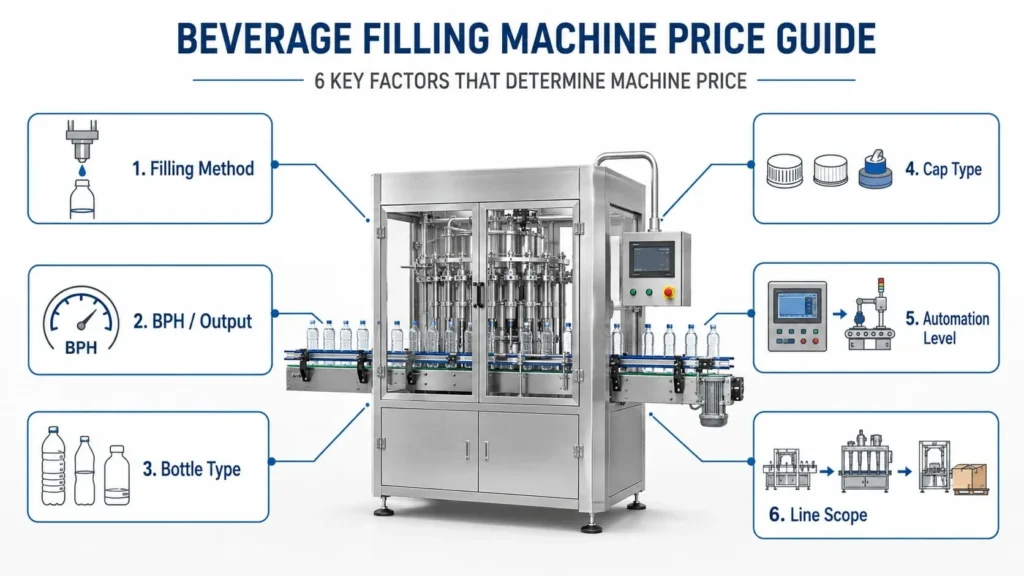
The main factors are filling method, automation level, number of filling heads, bottles per hour, bottle material, cap type, rinsing requirement, labeling or packing scope, control system, material contact requirements and commissioning support.
A basic filling unit costs less than a complete beverage filling line, but the lower number may not include capping, conveyors, bottle rinsing, labeling, carton packing, spare parts or installation support. Buyers should compare machine scope before comparing price.
Typical Price Factors Buyers Should Compare
| Price Factor | Why It Changes Cost | What Buyers Should Prepare |
|---|---|---|
| Filling method | Gravity, piston, metering pump, induction or level filling use different structures and controls. | Beverage type, viscosity, foaming behavior and filling accuracy target. |
| Automation level | Semi-automatic, automatic and integrated lines require different controls, conveyors and labor input. | Current production stage and labor plan. |
| Target output | Higher BPH usually requires more filling heads, stronger conveying and better synchronization. | Required bottles per hour and shift schedule. |
| Bottle type | PET, glass and special-shaped bottles need different handling and transfer design. | Bottle drawing, bottle size and sample photos. |
| Cap or closure type | Screw caps, ROPP caps, crown caps, corks and special closures require different capping equipment. | Cap sample, closure drawing or neck finish details. |
| Rinsing requirement | Bottle rinsing adds stations, layout space and integration work. | Confirm air rinsing, water rinsing or no rinsing. |
| Downstream scope | Labeling, coding, carton packing and carton sealing increase line cost but reduce manual work. | Label type, carton style and packing method. |
| Materials and controls | Contact materials, PLC, HMI, sensors and electrical standards affect cost and long-term reliability. | Product contact requirements, voltage and preferred component standards. |
| Testing and commissioning | FAT, spare parts, installation and training affect the real project cost. | Factory acceptance expectations and after-sales needs. |
Standalone Filler vs Monoblock vs Complete Beverage Filling Line
The largest price difference often comes from machine scope. A beverage filling machine for sale may look affordable if it only includes the filler, but a real production line may also need bottle feeding, capping, labeling, packing and conveyors.
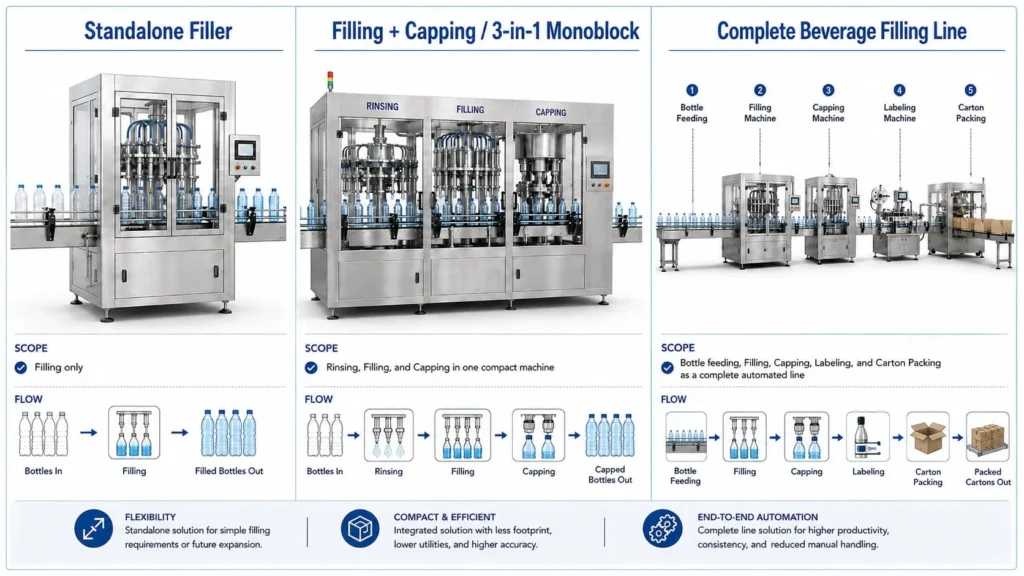
| Configuration | Best For | Price Logic |
|---|---|---|
| Standalone beverage filler | Existing lines that already have capping and downstream equipment. | Lower initial cost, but integration with existing equipment must be checked. |
| Filling + capping monoblock | Projects that need filling and cap closing synchronized in one compact machine. | Higher than a standalone filler, but reduces line matching work. |
| 3-in-1 rinse-fill-cap monoblock | Lines that need bottle rinsing, filling and capping in one frame. | Cost includes multiple process stations and integrated bottle transfer. |
| Complete beverage filling line | New projects requiring filling, capping, labeling, packing and conveying. | Higher budget, but clearer full-line responsibility and fewer integration gaps. |
For bottled non-carbonated beverage projects, MotivaPAC may recommend a beverage filling machine, a 3-in-1 beverage filling machine or a broader line configuration depending on the project scope.
When buyers compare beverage filling line cost with a standalone machine price, the quote should separate filling equipment, capping, conveying, labeling, packing, spare parts and commissioning support.
Why a Fixed Beverage Filling Machine Pricelist Can Be Misleading
A beverage filling machine pricelist can be useful for very standard small equipment, but it is often misleading for industrial bottling projects. Two buyers may ask for the same fill volume and still need different machines because their bottles, caps, beverage behavior, output targets and factory layouts are different.
The same product can change price when:
- PET bottles change to glass bottles
- screw caps change to ROPP caps, crown caps or corks
- the line adds bottle rinsing before filling
- output moves from a small automatic machine to a higher-BPH line
- the buyer needs labeling, coding or carton packing
- the beverage needs foam control, hot filling or special material contact review
- the supplier includes FAT, spare parts, installation or training
A practical quotation should define the machine scope first, then price the scope. That is more useful than a fixed price list that leaves key equipment outside the quote.
How Bottle, Cap and Beverage Type Change the Cost
Bottle and cap details often change the final beverage filling machine cost more than buyers expect. A round PET bottle, a square glass bottle and a small specialty bottle can each require different guides, starwheels, conveyor settings or bottle transfer parts.
Glass bottle projects may need more attention to bottle weight, breakage risk, liquid-level appearance and closure matching. For projects like wine, fruit wine, juice and tea drinks in glass bottles, buyers can review MotivaPAC’s glass bottle beverage filling machine quotation page before requesting a final price.
Cap type also matters. A screw cap, ROPP cap, crown cap or cork is not just a small accessory; it can change the required capping machine, cap feeding method, closing force, torque control and machine layout.
For the beverage itself, low-viscosity water-like products may need a different filling structure from juice, tea drinks, light foaming beverages or functional drinks. Carbonated drinks, beer, cans, aseptic products and dairy lines should be reviewed separately because they may require different technology.
Automatic Beverage Filling Machine Price: What Changes with Automation?
Automatic beverage filling machine price usually increases when the project requires higher output, more filling heads, synchronized capping, automatic bottle transfer, automatic cap feeding, PLC control, sensors and downstream integration.
Automation can increase the initial budget, but it may reduce labor, improve repeatability and make the line easier to run during repeat production. Buyers should compare the price with the production goal, not only with a small manual or semi-automatic machine.
Useful automation questions include:
- How many bottles per hour are required?
- Will the same bottle and cap run every day?
- How often will the line change bottle sizes?
- Does the project need bottle rinsing before filling?
- Should capping, labeling and packing be included?
- Who will handle installation, training and spare parts?
What to Prepare Before Asking for a Price
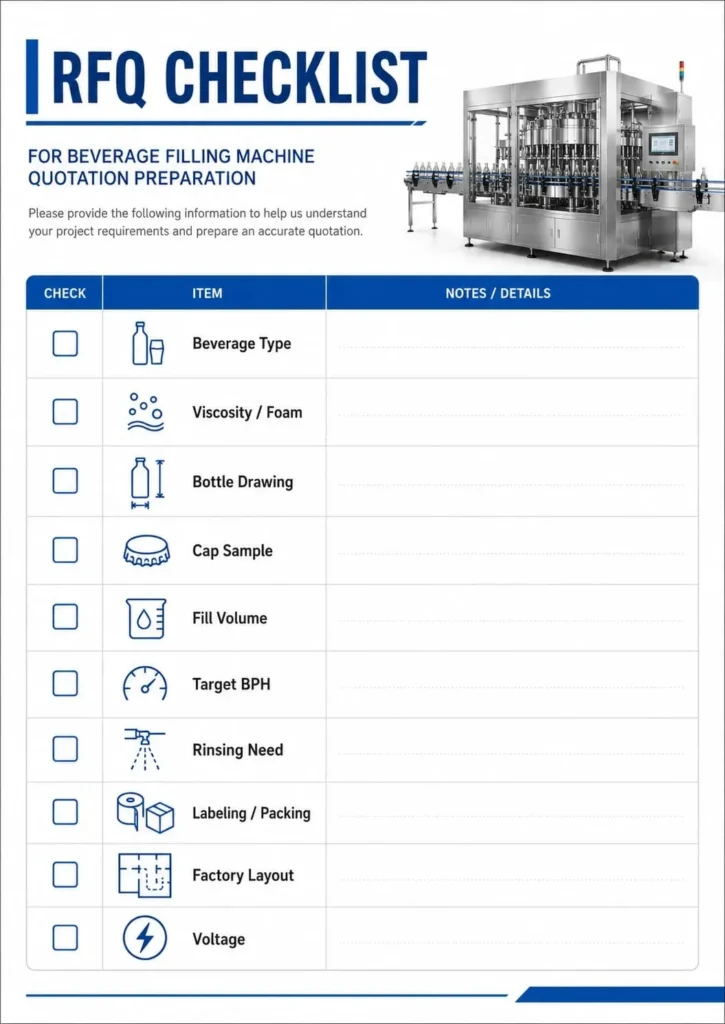
The fastest way to get a useful quote is to prepare the practical information that determines the machine configuration.
Send these details before requesting a beverage filling machine price:
- beverage type and whether it is carbonated or non-carbonated
- viscosity, foaming behavior and filling temperature
- bottle material, size, volume and mouth diameter
- bottle drawing, bottle sample or clear photos with dimensions
- cap type, cap sample or closure drawing
- required fill volume and accuracy
- target output in bottles per hour
- need for bottle rinsing before filling
- labeling, coding, carton packing or carton sealing requirements
- available factory layout and voltage
- expected spare parts, commissioning and training requirements
With these details, MotivaPAC can recommend whether a standalone filler, monoblock system, application-specific beverage filler or complete line is the better direction.
Buying a Beverage Filling Machine for Sale: What to Check Beyond Price
When evaluating a beverage filling machine for sale, a low price may look attractive, but the machine still needs to match the liquid, bottle, cap and production target. A machine that cannot run stable output, handle the bottle correctly or connect with downstream equipment can become more expensive after installation.
Before buying, check:
- whether the filling method fits the beverage
- whether bottle and cap samples have been reviewed
- whether the quoted scope includes capping, conveyors, labeling or packing
- whether contact materials match the product requirement
- whether the supplier can provide layout drawings
- whether spare parts and wearing parts are defined
- whether FAT, commissioning and training are included or optional
- whether the supplier can support repeat orders and future line changes
For B2B beverage production, the best value is not always the lowest initial number. The better value is a machine scope that can be installed, accepted, maintained and used for stable production.
How MotivaPAC Supports Beverage Filling Quotes
MotivaPAC reviews beverage filling projects by looking at the liquid, bottle, cap, output and line scope together. That allows the quote to reflect the real production requirement instead of only a model number.
MotivaPAC can discuss:
- standalone liquid filling machines
- filling and capping configurations
- 3-in-1 rinsing-filling-capping monoblock systems
- glass bottle beverage filling projects
- labeling and carton packing integration
- complete bottling line layout
- quote scope, acceptance points and commissioning support
Explore related pages:
- Beverage Filling Machine
- Liquid Filling Machine
- 3-in-1 Beverage Filling Machine
- Glass Bottle Beverage Filling Machine
- Monoblock Systems
FAQ About Beverage Filling Machine Prices
How much does a beverage filling machine cost?
The cost depends on filling method, automation level, bottle type, cap type, target output and line scope. A standalone filler costs less than a monoblock or complete beverage filling line, but it may not include capping, labeling, packing or commissioning support.
Why do beverage filling machine prices vary so much?
Prices vary because beverage projects use different liquids, bottles, caps, filling speeds, materials, control systems and integration requirements. Two projects with the same fill volume can need different machines if the bottle, cap or output is different.
Can MotivaPAC provide a beverage filling machine pricelist?
MotivaPAC can provide a quotation after reviewing the beverage, bottle, cap, filling volume, target output and line scope. A fixed pricelist can be misleading when key project details are not confirmed.
What affects automatic beverage filling machine price?
Automatic machine price is affected by output, number of filling heads, automation level, bottle transfer, cap feeding, PLC control, sensors, material requirements and downstream integration.
Is a complete beverage filling line more cost-effective than buying one machine?
It depends on the project. A complete line has a higher initial budget, but it can reduce integration risk when the buyer needs filling, capping, labeling, packing and conveyors planned together.
What should I send before requesting a quote?
Send beverage type, bottle drawing, cap sample, fill volume, target BPH, factory layout, voltage, labeling or packing needs and any cleaning or material contact requirements.
Request a Beverage Filling Machine Quote
Share your beverage type, bottle drawing, cap sample, fill volume and target output. MotivaPAC will review the project and recommend a suitable beverage filling machine, monoblock system or complete line configuration.