What Equipment Is Commonly Used in Wine, Edible Oil, and Condiment Bottling Lines?
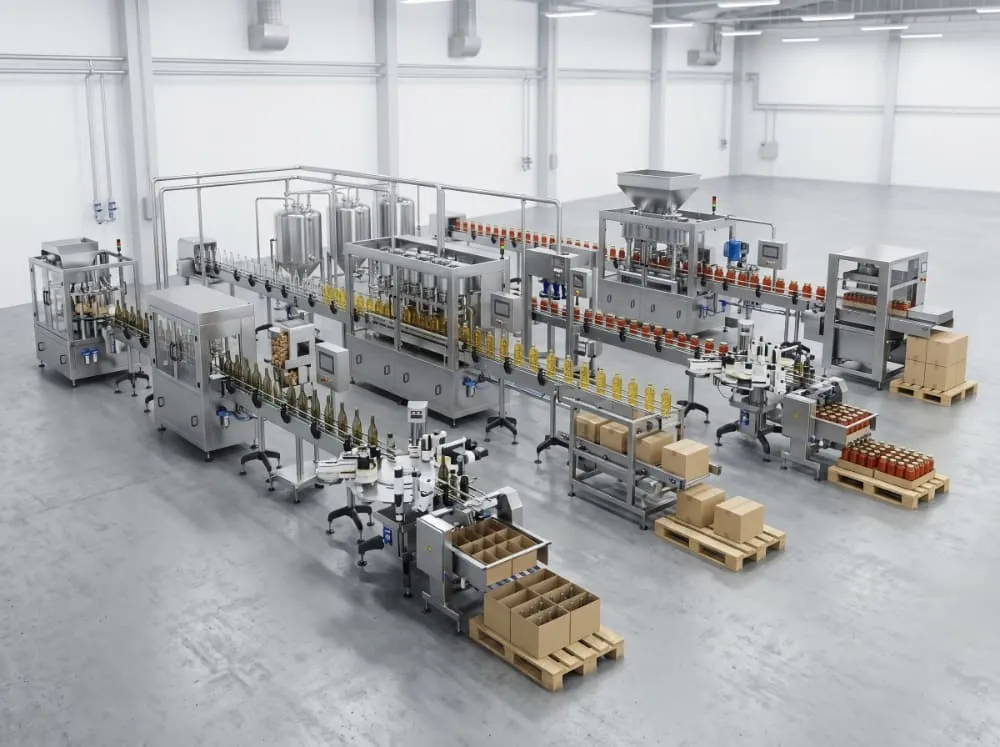
Planning a bottling line is not only about choosing a filling machine. A practical production line usually includes several connected steps before and after filling, such as bottle feeding, rinsing, filling, capping or corking, drying, labeling, coding, and end-of-line packaging.
For wine, edible oil, and condiment products, some equipment categories are similar. All three applications need accurate filling, reliable closure, stable bottle handling, clear labeling, and suitable packing. However, the final equipment configuration should not be the same for every product.
A wine bottling line may require bottle rinsing, gentle filling, corking or capping, neck finishing, and high-quality label presentation. An edible oil bottling line often focuses on filling accuracy, drip control, secure cap sealing, and clean bottle surfaces before labeling. A condiment filling line or sauce bottling line may require more attention to viscosity, particulates, hygiene, nozzle design, and container type.
This guide explains the common bottling line equipment used across wine, edible oil, and condiment projects, and shows how product characteristics change the final line configuration.
Quick Answer: The Core Equipment Found in Most Bottling Lines
Most bottling lines are built around a similar production flow. A typical complete bottling line may include:
- bottle feeding or loading equipment
- bottle washing or rinsing machine
- liquid filling machine
- capping, corking, or sealing machine
- bottle drying machine
- labeling machine
- coding or marking machine
- carton packing, sealing, palletizing, or other end-of-line packaging equipment
Not every project needs every machine. A smaller production setup may only need a filling-capping-labeling line. A more complete line may include bottle rinsing, drying, coding, carton opening, case packing, carton sealing, and palletizing.
The right equipment list depends on your product type, bottle style, closure type, filling volume, target output, hygiene requirements, available space, and automation level.
The Standard Process Flow of a Bottling Line
A bottling line works best when every machine is planned as part of one complete process. If each machine is selected separately without considering the whole line, problems can appear later in bottle transfer, speed matching, labeling stability, or downstream packing.
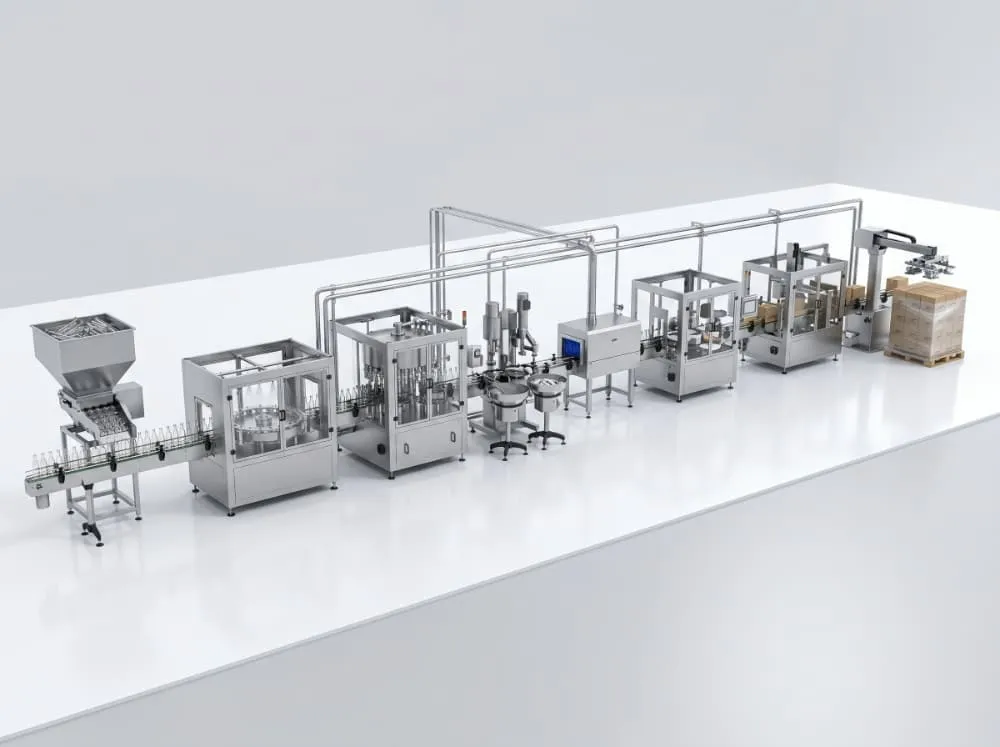
A common liquid filling line follows this process:
Bottle feeding → washing or rinsing → filling → capping, corking, or sealing → drying → labeling and coding → packing and palletizing
Each step has a specific role.
Bottle Feeding and Handling
Bottle feeding is the first step in many bottling lines. It may involve a manual loading table, rotary turntable, bottle unscrambler, bottle sorting equipment, or conveyor system.
The purpose is to feed bottles into the line smoothly and consistently. This becomes more important when the line speed increases, or when bottles are lightweight, narrow, unstable, or irregularly shaped.
If bottle feeding is unstable, the problem may affect the entire line. Filling, capping, labeling, and packing all depend on consistent bottle flow.
Bottle Washing or Rinsing
Bottle washing or rinsing is used to remove dust, particles, or other contamination before filling. This step is common in many wine, beverage, edible oil, and food liquid projects, especially when clean presentation and product safety are important.
Some projects use water rinsing. Some may use air rinsing. Some may require bottle washing or more specialized cleaning depending on bottle condition and production standards.
Not every project requires bottle rinsing, but it should be considered whenever bottle cleanliness affects product quality, labeling appearance, or buyer confidence.
Filling
The filling machine is the core of the line, but it is not the whole line.
The right filling equipment depends on product viscosity, fill volume, filling accuracy, foaming behavior, particulates, dripping behavior, bottle opening, and target output. Wine, edible oil, and condiment products may all be liquids, but they can require very different filling methods.
For many projects, the filling section is the part of the line that changes the most from one product to another.
Capping, Corking, or Sealing
After filling, the container must be closed correctly.
Wine bottles may use corks, screw caps, aluminum caps, anti-theft caps, or neck finishing systems. Edible oil bottles often use plastic screw caps, anti-theft caps, or sealing formats designed to prevent leakage. Condiments and sauces may use screw caps, vacuum lids, pump caps, wide-mouth jar lids, or other sealing systems.
Closure type directly affects which capping, corking, or sealing machine should be used.
Drying
Bottle drying is often needed before labeling or coding, especially when the bottle surface may be wet after rinsing, filling, or external washing.
If the bottle surface is not dry, labels may wrinkle, peel, shift, or fail to adhere properly. Coding quality may also become unstable if moisture remains on the surface.
For wine, edible oil, and condiment lines, drying is often a small but important step for stable downstream performance.
Labeling and Coding
Labeling gives the product its finished appearance. Coding adds production dates, batch numbers, traceability codes, expiration dates, or other required information.
Different bottle shapes and label types require different labeling methods. Round bottles, square bottles, front-and-back labels, neck labels, sleeve labels, and irregular containers all create different machine requirements.
Good labeling is not only about appearance. It also affects product information, compliance, shelf presentation, and brand trust.
End-of-Line Packaging
End-of-line packaging equipment handles the final production steps after labeling and coding.
Depending on the project, it may include:
- carton opening machine
- case packing machine
- carton sealing machine
- shrink wrapping machine
- palletizer
- conveyor systems
- accumulation tables
For small lines, manual packing may still be acceptable. For larger lines, end-of-line packaging equipment helps prevent manual packing from becoming the bottleneck.
Common Bottling Line Equipment and What Each Machine Does
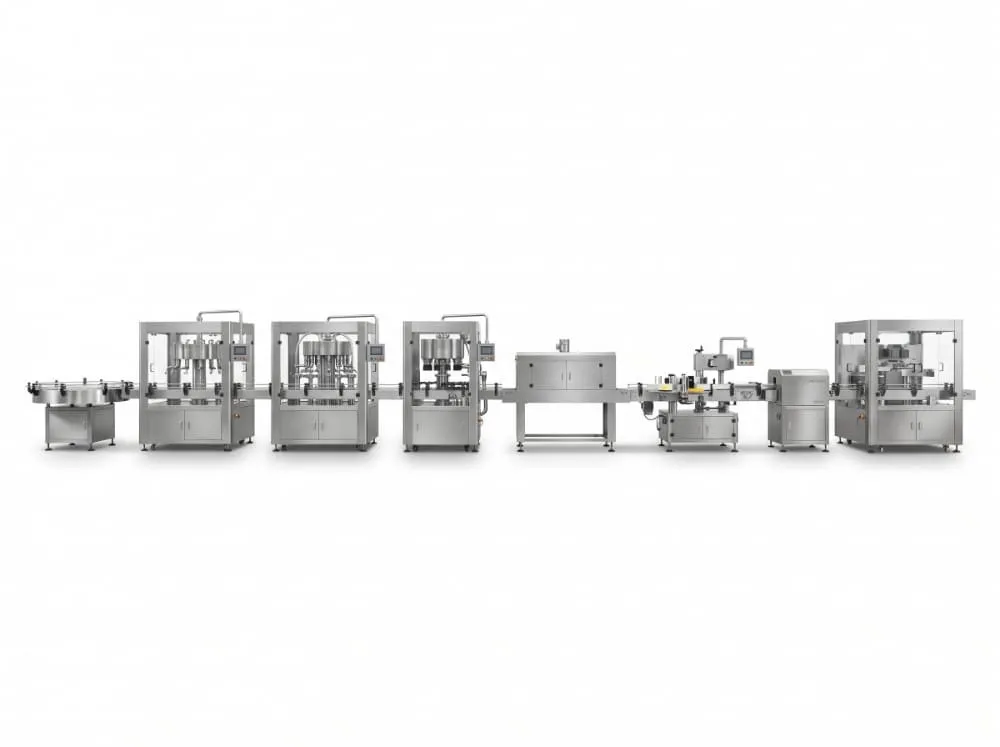
The exact equipment list depends on your product and packaging, but most bottling projects are built from the following machine categories.
Bottle Feeding or Loading Equipment
Bottle feeding or loading equipment moves empty bottles into the line in a controlled way.
For low-output projects, this may be a simple manual feeding table or rotary turntable. For higher-output lines, bottle sorting and automatic feeding may be needed to keep the line running continuously.
This equipment is especially useful when:
- the line needs stable bottle spacing
- manual loading is limiting output
- bottles are lightweight or unstable
- downstream machines require consistent bottle flow
- the line needs to operate with fewer interruptions
Bottle feeding may look simple, but poor feeding stability can reduce the efficiency of every machine after it.
Bottle Washing or Rinsing Machine
A bottle washing or rinsing machine cleans bottles before filling.
This can be important when bottles are stored before production, when dust or particles may remain inside, or when the product requires better packaging hygiene. In wine bottling, rinsing is often part of the standard preparation process. In edible oil and condiment lines, rinsing depends on bottle source, cleanliness level, and production standards.
Bottle cleaning can involve water rinsing, air rinsing, or other cleaning methods. The right option depends on the container and the product requirement.
Liquid Filling Machine
The liquid filling machine delivers the product into the bottle or container.
This is usually the most important equipment selection point because different liquids behave differently during filling. A free-flowing wine, a smooth edible oil, a thin soy sauce, and a thick chili sauce should not always use the same filling method.
When selecting a filling machine, you should consider:
- product viscosity
- fill volume
- filling accuracy
- foaming tendency
- particulates
- dripping behavior
- container opening
- product temperature
- required output
- cleaning requirements
For thin liquids, a simpler filling method may be enough. For thicker sauces, oils, or products with particles, the filling system may need stronger control, larger passages, anti-drip design, or easier cleaning access.
Capping, Corking, or Sealing Machine
After filling, the container needs a reliable closure.
The closure machine depends on the cap, cork, lid, or sealing method. Wine may require corking, screw capping, aluminum cap sealing, or neck finishing. Edible oil may require screw capping or anti-theft caps. Condiments and sauces may use plastic caps, wide-mouth lids, pump caps, vacuum lids, or sealing systems.
Closure quality affects:
- leakage prevention
- product freshness
- shelf life
- finished appearance
- transport safety
- customer experience
A good bottling line should match the closure machine to the exact container and cap structure.
Bottle Drying Machine
A bottle drying machine removes water or moisture from the outer bottle surface before labeling, coding, or packing.
This is useful when bottles are rinsed before filling, when product residue remains after filling, or when labels require a clean and dry surface. Edible oil and sauce products may also need surface handling because residue can affect label adhesion and carton cleanliness.
Drying is often not the first machine buyers think about, but it can strongly affect label quality and final package appearance.
Labeling Machine
The labeling machine applies labels to finished containers.
Labeling requirements depend on:
- bottle shape
- label material
- label position
- label size
- single-side or double-side labeling
- round bottle or flat bottle format
- sleeve label or sticker label requirement
Wine often places a strong emphasis on label alignment and appearance. Edible oil and condiment products may need labels for product identity, ingredients, nutrition, batch information, and brand presentation.
A labeling machine should be selected based on the bottle shape and label style, not only on line speed.
Sleeve Labeling Machine
A sleeve labeling machine applies shrink sleeve labels around bottles or containers.
This may be used when the product requires full-body decoration, tamper-evident neck sleeves, or shrink sleeve packaging. Sleeve labeling is common in many beverage, food, and daily chemical packaging projects.
For wine and some bottle products, neck shrink or capsule finishing may also be used to improve appearance and closure presentation.
Coding Machine
A coding machine prints or marks production information on the bottle, cap, label, or carton.
Common coding information includes:
- production date
- batch number
- expiration date
- lot code
- traceability code
Coding is a small part of the line, but it is important for product identification, logistics, and quality control.
End-of-Line Packaging Equipment
End-of-line packaging equipment handles the final stage after bottles are filled, closed, labeled, and coded.
Depending on the project, this may include:
- carton opening machine
- case packing machine
- carton sealing machine
- shrink wrapping machine
- palletizer
- conveyors and accumulation tables
For low-output projects, some of these steps can be manual. For medium- and high-output lines, end-of-line equipment can reduce labor, improve consistency, and prevent packing from slowing the entire production flow.
How Equipment Configuration Changes by Product Type
Wine, edible oil, and condiment bottling lines share many machine categories, but the final configuration should not be identical.
The product itself changes the equipment decision.
Wine Bottling Line Equipment
A wine bottling line usually focuses on clean bottle preparation, gentle filling, reliable closure, neck finishing, accurate labeling, and strong final presentation.
A typical wine bottling line may include:
- bottle feeding or loading equipment
- bottle rinsing machine
- wine filling machine
- corking machine or capping machine
- aluminum cap or anti-theft cap sealing equipment where needed
- neck shrink or capsule finishing equipment
- bottle drying machine
- labeling machine
- coding machine
- carton packing or downstream packaging equipment
Wine bottles are often glass, and the finished package may rely heavily on visual presentation. Bottle handling, closure quality, neck finishing, and label position are especially important.
If corks are used, a corking machine becomes part of the line. If screw caps or aluminum caps are used, the closure system changes. If neck capsules or shrink sleeves are part of the package, neck finishing equipment should also be considered.
The key point is simple: a wine bottling line is not just a filling machine. It is a coordinated process from bottle preparation to finished retail packaging.
Edible Oil Bottling Line Equipment
An edible oil bottling line often focuses on filling accuracy, anti-drip performance, cap sealing reliability, clean bottle surfaces, and stable carton packing.
A typical edible oil bottling line may include:
- bottle feeding equipment
- optional bottle rinsing machine
- edible oil filling machine
- capping machine
- bottle drying or surface cleaning section if needed
- labeling machine
- coding machine
- carton packing machine
- carton sealing machine
- palletizing equipment if output requires it
Edible oil can be filled in PET bottles, glass bottles, or larger containers. The filling machine should help control dripping and maintain consistent fill volume. Since oil residue can affect bottle appearance, label adhesion, and carton cleanliness, surface handling before labeling may be important.
Cap sealing reliability also matters because leakage can damage labels, cartons, pallets, and customer trust.
Compared with wine, edible oil usually relies less on corking or neck capsule finishing, but it requires careful attention to filling accuracy, anti-drip design, cap sealing, and clean bottle handling.
Condiment and Sauce Bottling Line Equipment
A condiment filling line or sauce bottling line often has the greatest variation in equipment configuration.
This is because condiments and sauces may be thin, thick, sticky, foamy, or filled with particulates. Soy sauce and vinegar behave very differently from chili sauce, thick dressing, syrup, paste, or sauces containing seeds, pulp, or spices.
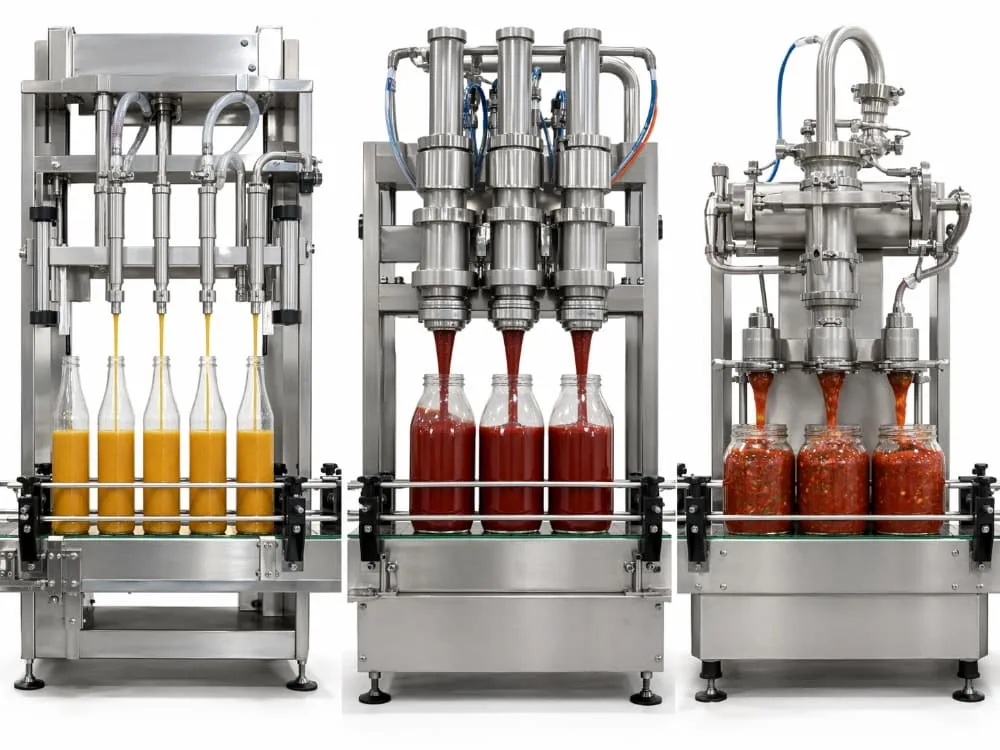
A typical condiment or sauce bottling line may include:
- bottle or jar feeding equipment
- optional bottle washing or rinsing machine
- sauce filling machine
- capping, sealing, or lid closing machine
- bottle or jar cleaning section if needed
- labeling machine
- coding machine
- carton packing or downstream packaging equipment
The filling section is usually the most important decision.
Thin condiments may be easier to fill with a simpler liquid filling system. Thick sauces may need a filling method designed for higher viscosity. Products with particulates may need larger passages, suitable valves, and nozzles that reduce clogging. Sticky products may require anti-drip design and easier cleaning.
Container type also matters. A narrow-neck bottle, wide-mouth jar, squeeze bottle, and glass sauce bottle may require different filling nozzles, capping systems, and handling structures.
For condiment and sauce projects, the line should be designed around the product first, not around a generic equipment list.
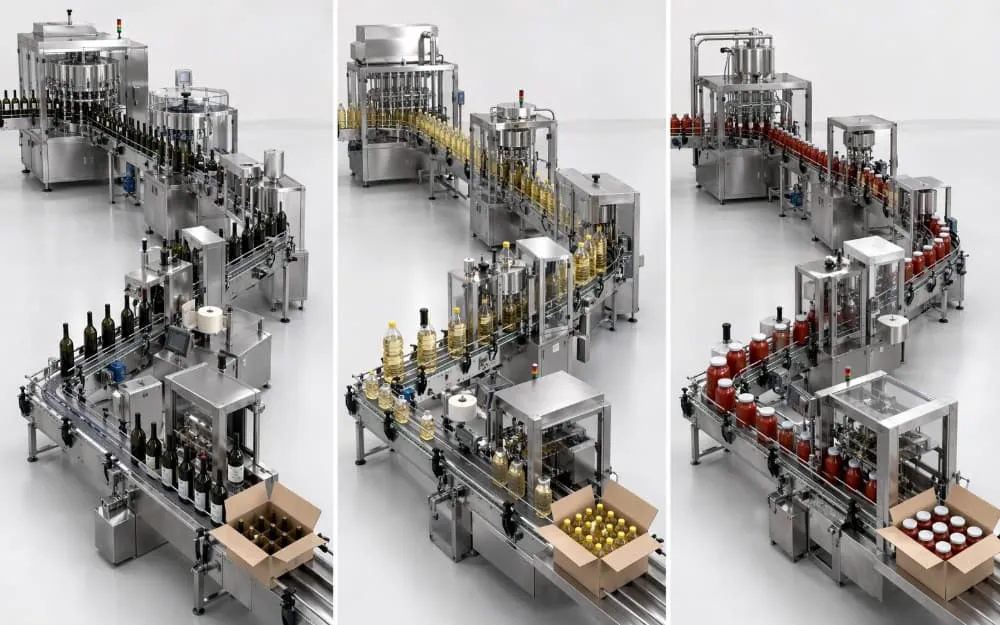
Which Machines Are Shared Across All Three Lines, and Which Are Product-Specific?
Most wine, edible oil, and condiment bottling lines share the same major equipment categories. However, some machine details change significantly depending on the product.
| Equipment | Wine Bottling Line | Edible Oil Bottling Line | Condiment / Sauce Bottling Line | Why It Matters |
|---|---|---|---|---|
| Bottle feeding | Common | Common | Common | Keeps containers moving smoothly into the line |
| Bottle washing / rinsing | Often important | Depends on bottle condition | Depends on hygiene needs | Helps prepare bottles before filling |
| Filling machine | Required | Required | Required | Product behavior changes the filling method |
| Capping / corking / sealing | Corking, screw capping, aluminum cap sealing | Screw caps, anti-theft caps, sealing formats | Screw caps, jar lids, pump caps, sealing systems | Closure type changes machine selection |
| Bottle drying | Useful after rinsing or before labeling | Useful if oil residue or moisture affects labels | Useful if bottles or jars need clean label surfaces | Supports stable labeling and coding |
| Labeling machine | Important for presentation | Important for product information | Important for branding and compliance | Bottle shape and label style affect machine choice |
| Sleeve / neck shrink equipment | Often used for neck finishing or presentation | Less common, depends on packaging style | Depends on product and packaging design | Supports decoration or tamper-evident packaging |
| Coding machine | Common | Common | Common | Adds production date, batch, and traceability information |
| End-of-line packaging | Depends on output | Often important for carton packing | Depends on product and output | Prevents manual packing from becoming the bottleneck |
| Palletizing | Depends on scale | Useful for higher-output lines | Useful for larger projects | Reduces labor in final handling |
The most important takeaway is this:
Most lines share similar equipment categories, but the filling system, closure system, hygiene design, and downstream packaging level are usually product-specific.
How Bottle Type, Closure Type, and Product Behavior Affect the Final Line Design
A good line design starts with the real packaging conditions, not just the industry name.
Two wine projects may need different equipment if one uses corks and the other uses screw caps. Two edible oil projects may need different filling and cap handling if bottle size and output are different. Two condiment projects may need completely different filling systems if one product is thin soy sauce and the other is thick chili sauce with particles.
Bottle Type
Bottle type affects feeding, filling, capping, labeling, and packing.
Important bottle factors include:
- glass or PET material
- round, square, flat, or irregular shape
- narrow neck or wide mouth
- bottle height and diameter
- container stability on the conveyor
- whether bottles are lightweight or easily tipped
- whether the product is packed in bottles, jars, or larger containers
A stable round bottle is usually easier to run than a lightweight irregular container. If your bottle is unusual, the line design should account for it early.
Closure Type
Closure type determines which capping, corking, or sealing equipment is needed.
Common closure options include:
- corks
- screw caps
- aluminum caps
- plastic caps
- anti-theft caps
- pump caps
- vacuum caps
- wide-mouth jar lids
- induction sealing or other sealing formats
Wine may use corking or screw capping. Edible oil often uses screw caps or anti-theft caps. Condiments may require different sealing styles depending on the bottle, jar, or cap structure.
Product Behavior
Product behavior strongly affects the filling section.
Key factors include:
- viscosity
- foaming
- particulates
- dripping
- product temperature
- hygiene requirement
- fill volume range
- cleaning frequency
Low-viscosity products are easier to move through the filling path. Thick or particulate products require more careful selection of filling method, nozzle design, and cleaning structure.
This is why the same basic line structure can become very different once the product details are defined.
Output and Automation Level
The same product may use different equipment at different output levels.
A smaller project may start with a simple filling-capping-labeling line. A larger project may require a more complete bottling line with automatic bottle feeding, rinsing, filling, capping, drying, labeling, coding, carton packing, and palletizing.
Output target affects:
- number of filling heads
- conveyor design
- automation level
- operator requirement
- downstream packing method
- floor space planning
- future expansion planning
A line that fits today’s output may not fit tomorrow’s growth if expansion is not considered early.
Do You Need a Simple Filling-Capping-Labeling Line or a More Complete Bottling Line?
Not every project needs a full line from the beginning.
A simple line may be enough if your output is moderate, the process is straightforward, and some manual handling is still acceptable. In many cases, a filling machine, capping machine, labeling machine, and conveyor can solve the core production need.
A simple filling-capping-labeling line may fit when:
- production volume is still moderate
- the bottle format is stable
- the product is not too difficult to fill
- manual packing is still acceptable
- the budget is more controlled
- the project may expand in stages
A more complete bottling line may be better when:
- the project is starting from zero
- multiple process steps must be connected
- bottle rinsing or washing is required
- output is higher
- labor reduction is important
- packing speed must match filling speed
- carton packing or palletizing is needed
- future expansion is expected
The better choice depends on the whole production plan. Buying only the filling machine may seem simpler at first, but if capping, labeling, coding, or packing cannot keep up, the line will still struggle.
What to Prepare Before Requesting a Quote for a Bottling Line
If you want a useful recommendation, prepare the project details before requesting a quote.
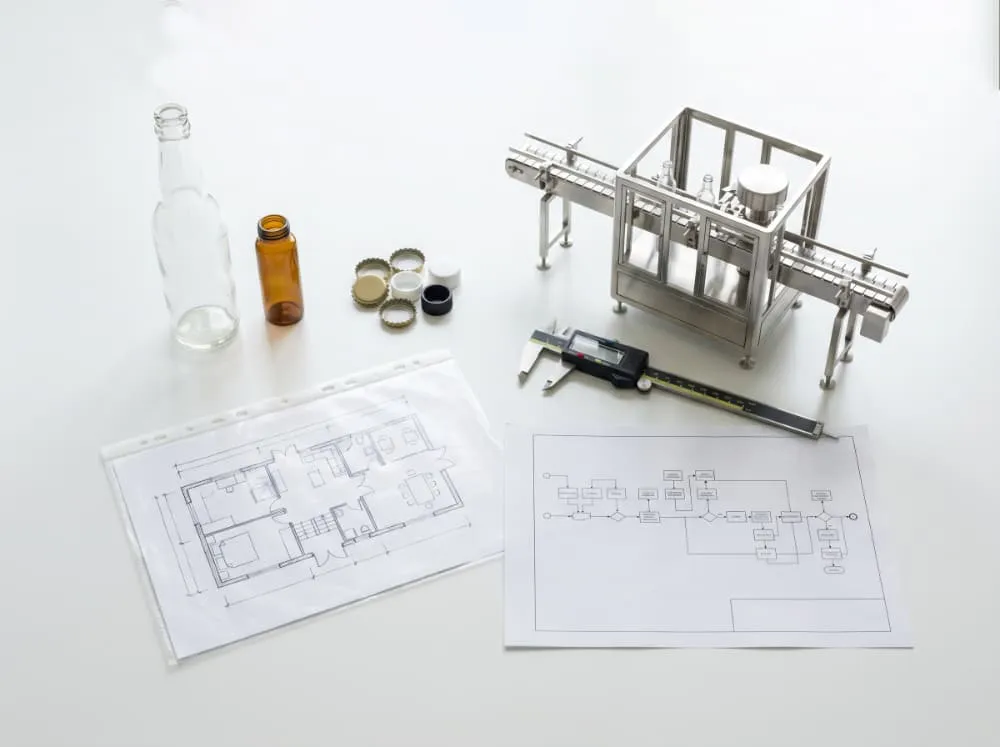
The most important information includes:
- Product type
- Product viscosity
- Whether the product foams
- Whether the product contains particulates
- Bottle or container type
- Bottle size and fill volume
- Closure type
- Target output
- Required process steps
- Available floor space
- Current equipment, if any
- Preferred automation level
- Future expansion plans
With these inputs, it becomes much easier to decide whether your project needs a basic filling-capping-labeling line, a monoblock system, or a more complete bottling line.
It also helps avoid common mistakes such as choosing a filler before confirming the cap type, ignoring bottle stability, underestimating labeling requirements, or planning a high-output filling section without enough downstream packing capacity.
Final Thoughts
The equipment used in wine, edible oil, and condiment bottling lines may look similar on the surface, but the correct configuration depends on the product and packaging details.
Most bottling lines share a common process flow: bottle feeding, rinsing or washing, filling, capping or sealing, drying, labeling, coding, and packing. But the final equipment choice changes based on product viscosity, closure type, bottle shape, hygiene needs, target output, and automation level.
A wine bottling line may need rinsing, gentle filling, corking or capping, neck finishing, labeling, and packing. An edible oil bottling line may focus more on filling accuracy, drip control, capping reliability, and clean bottle handling. A sauce bottling line or condiment filling line may require special attention to viscosity, particulates, filling method, container type, and cleaning.
The best way to plan bottling line equipment is to start with your product, bottle, closure, output, and process requirements. Once those details are clear, the right line configuration becomes much easier to define.
If you already know your product type, bottle style, closure type, fill volume, and target output, contact us to discuss a suitable equipment configuration for your wine, edible oil, or condiment bottling project.
FAQ
What equipment is needed for a basic bottling line?
A basic bottling line usually includes bottle feeding, filling, capping or sealing, labeling, coding, and conveyors. Depending on the product and bottle condition, it may also include bottle washing or rinsing, drying, and end-of-line packing equipment.
What is the difference between a wine bottling line and an edible oil bottling line?
A wine bottling line often focuses on bottle rinsing, gentle filling, corking or capping, neck finishing, labeling, and presentation. An edible oil bottling line usually focuses more on filling accuracy, drip control, cap sealing, labeling, coding, and carton packing.
Why does condiment or sauce bottling equipment need special attention?
Condiments and sauces can vary widely in viscosity, particulates, foaming behavior, and container type. A thin soy sauce and a thick chili sauce may require different filling systems, nozzle designs, and cleaning considerations.
Do all bottling lines need bottle washing or rinsing equipment?
No. Bottle washing or rinsing depends on bottle cleanliness, product requirements, and production standards. It is common in many beverage, wine, and food liquid lines, but not every project requires the same cleaning process.
When should I choose a complete bottling line instead of separate machines?
A complete bottling line makes more sense when you need multiple connected process steps, higher automation, smoother workflow, reduced labor, and better long-term expansion. Separate machines may be enough for smaller projects or staged upgrades.