
Net Weight Filling Machines for Pails, Drums & IBCs
MotivaPAC JWF liquid weighing filling machines measure the actual net weight added to each container. Load-cell feedback controls coarse and fine filling for pails, drums and large palletized containers.
Mass is measured directly instead of being calculated from volume. Correct sizing, calibration and stable product supply can help the machine approach the target with less systematic overfill.
● Direct net-weight control
● Coarse and fine filling stages
● 5-1000 kg catalog net-fill range
● Package-specific configuration
Liquid + Container + Target Weight + Output
5-30 kg
50-300 kg
Up to 1000 L
Load Cell
Control the Quantity Buyers Actually Specify
Net weight filling is most useful when the release target is a mass value and every container can be weighed during the filling cycle.
Direct Net-Weight Control
The scale measures the product added to the container rather than estimating mass from a nominal volume.
Helps Limit Systematic Overfill
Coarse and fine filling can help approach the target with less product giveaway when the system is correctly sized, calibrated and supplied.
No Density-to-Volume Conversion
The target is controlled by mass. Temperature and viscosity can still affect flow behavior, cycle time and machine tuning.
Good fit
Compare first
Confirm separately
How to Select a Net Weight Filling Machine
Start with container weight and production flow. Then confirm liquid behavior, inlet position, product supply and the weighing tolerance required at FAT.
Choose JWF-30 for manually handled 5-30 kg pails, the multi-head JWF automatic series for inline 10-30 kg production, JWF-300 for 50-300 kg drums, and JWF-1000 for 200 L drums or large containers up to the catalog 1000 L reference.
| Model | Package reference | Catalog net-fill range | Automation | Accuracy reference | Output reference |
|---|---|---|---|---|---|
| JWF automatic series | Pails or jerrycans; dimensions confirmed by sample or drawing | 10-30 kg | Automatic, 2-8 heads | Confirm for the product, target weight and FAT method | Up to 600 x 30 kg pails/hour |
| JWF-30 | Manually handled pails or buckets | 5-30 kg | Semi-automatic | Catalog: +/-0.2% under specified test conditions | 100-200 buckets/hour |
| JWF-300 | Round or square drums; up to 600 x 970 mm catalog reference | 50-300 kg | Automatic drum filling | Catalog: +/-0.2% under specified test conditions | Up to 60 drums/hour at the 200 kg reference |
| JWF-1000 | 200 L drum and up to 1000 L large-container reference | 200-1000 kg | Automatic large-container filling | Confirm for the target net weight and FAT method | 20-35 DPH at 200 L; 8-12 DPH at 1000 L |
Do not treat kilograms and liters as interchangeable.
Container nominal volume is stated in liters. The machine target is the net product weight in kilograms. Product density, required fill level, container tare and permitted gross load determine how much a specific drum or IBC can receive.
Accuracy and output figures are catalog references, not unconditional guarantees. Product viscosity, temperature, supply flow, foaming, container handling, target weight, sample count and the agreed FAT method affect the final acceptance value.
Net Weight Fillers from Pails to IBC-Size Containers
Each configuration uses weighing feedback, but the container handling, filling head, working platform and production sequence change as package size increases.
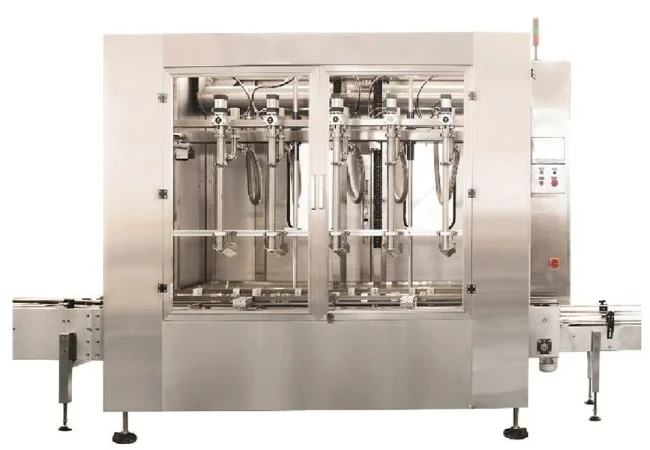
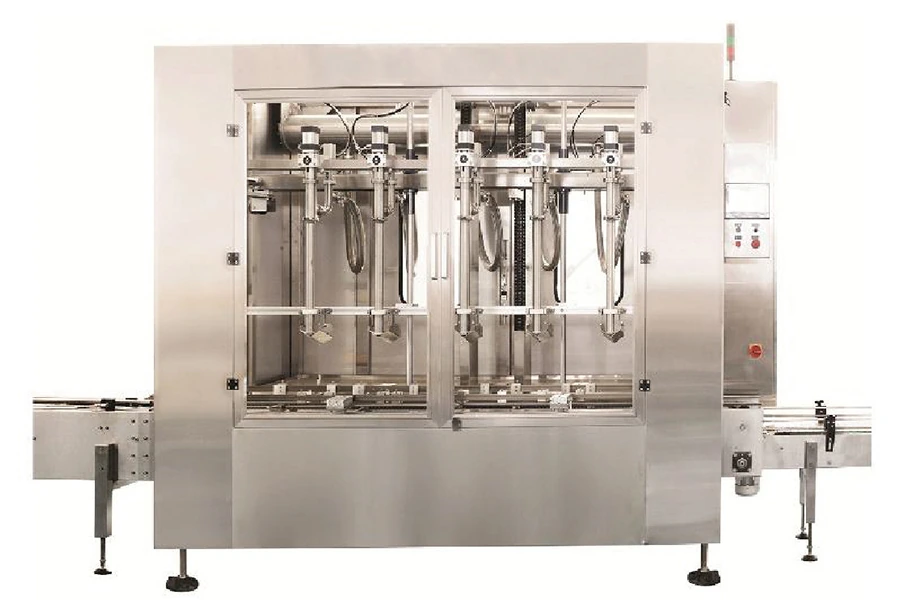
Automatic Multi-Head Pail Filling Machine
Best for:Repeat 10-30 kg production where pails or jerrycans move through an automatic inline filling process.
Head options:2 / 3 / 4 / 6 / 8
Container reference:160-360 mm long, 100-300 mm wide, 250-500 mm high
Opening reference:At least 40 mm
Control:Individual weighing and feedback at each filling head
Accuracy:Confirm for the product, target weight and FAT method
Submerged filling can be reviewed for liquids that foam or splash. Container presence and positioning should be interlocked with the fill cycle.
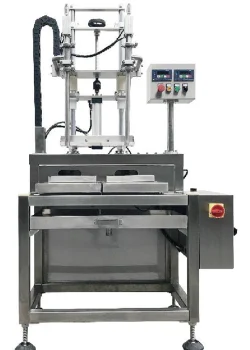
Semi-Automatic Pail Filling Machine
Best for:5-30 kg buckets, lower output, multiple SKUs or projects where an operator loads and removes each container.
Filling range:5-30 kg
Catalog output:100-200 buckets/hour
Catalog accuracy:+/-0.2% under specified test conditions
Air pressure:0.6-0.8 MPa
The operator workflow, container height, opening and safe lifting method should be confirmed before the machine layout is fixed.
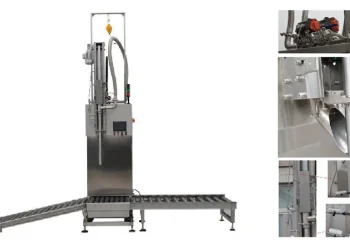
Automatic Drum Filling Machine
Best for:50-300 kg round or square drums that need fast/fine filling and controlled positioning under the filling lance.
Filling range:50-300 kg
Container reference:Up to 600 x 970 mm
Catalog accuracy:+/-0.2% under specified test conditions
Catalog speed:Up to 60 drums/hour at 200 kg reference
Review bung alignment, drip collection, submerged filling and feed-pump capacity around the actual drum and liquid.
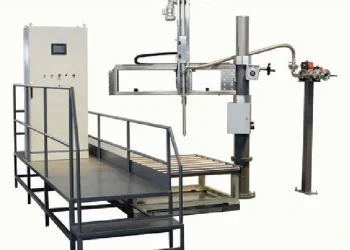
Automatic Large-Container and IBC Filler
Best for:200 L drums and large containers up to the catalog 1000 L reference, with target net weight confirmed from the actual product and package.
Filling range:200-1000 kg
Pallet reference:1200 x 1200 x 150 mm
200 L reference:20-35 drums/hour
1000 L reference:8-12 containers/hour
Accuracy:Confirm for the target net weight and FAT method
Confirm pallet entry direction, inlet coordinates, container height, operator access, earthing and hazardous-area requirements before layout approval.
Match the Machine to the Product and Plant Conditions
Container size alone is not enough. Product flow, temperature, foaming, cleaning, contact materials and safety classification affect the filling-head and supply-system design.
Oils & Lubricants
Edible oils, lubricating oils and similar products where target weight and temperature-dependent flow need to be defined.
Confirm:
Viscosity range, filling temperature, pump supply, dripping and cleaning.
Industrial Chemicals & Detergents
Liquid detergents and industrial products packed in pails, drums or large containers.
Confirm:
Composition, corrosion, foam, seals, wetted materials and ventilation.
Food Oils & Liquid Ingredients
Bulk food liquids where contact construction, drainage and an agreed cleaning procedure are part of the project.
Confirm:
Hygiene requirement, product temperature, allergen controls and cleaning scope.
Paints & Coatings
A quote-dependent application for products that may vary in viscosity, solvent content and hazardous-area classification.
Confirm:
Flammability, explosion protection, earthing, fume control and changeover cleaning.
How Net Weight Filling Works
Net weight filling is also called gravimetric filling or weigh filling. The empty container sits on a weighing platform, and the controller tracks live weight while the product enters the package.
Tare the container
The system records the empty pail, drum or IBC before filling starts.
Run the coarse fill
High flow reduces cycle time while the load cell continuously sends weight data.
Switch to fine filling
The controller reduces the product flow before the target to limit overshoot.
Stop and release
The final net weight is checked against the configured tolerance before the container moves on.
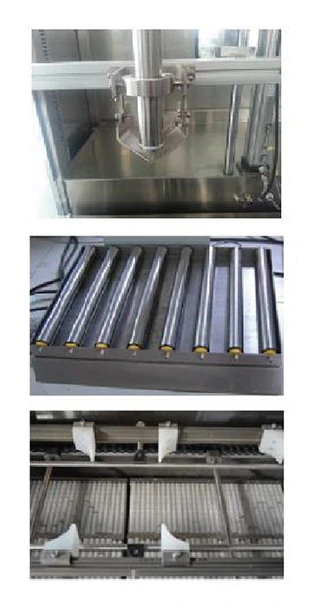
Details show the filling nozzle, roller conveyor and container-positioning arrangement.
Net Weight vs Piston, Flow Meter and Gravity Filling
Compare what each method measures or controls. The correct choice depends on package size, liquid behavior, cleaning, target accuracy and required output.
| Method | What controls the fill | Typical fit | Main point to confirm |
|---|---|---|---|
| Net weight | Live container mass from a scale or load cell | Pails, drums and large packages released by target weight | Scale environment, coarse/fine cut-off, in-flight product and FAT method |
| Piston | Positive-displacement piston volume | Small and medium bottles, including many viscous products | Piston range, viscosity, particles, seals and cleaning |
| Flow meter | Inline measured flow or mass, depending on meter type | Projects requiring a closed product path or meter-based dosing | Meter principle, conductivity or density, pressure, bubbles and cleaning |
| Gravity / timed gravity | Product flow through time, valve or level control | Free-flowing, low-viscosity liquids in common bottles | Head pressure, foam, liquid level, fill time and bottle opening |
For small retail bottles, compare the existing piston filler, gravity fillerand broader liquid filling machine range.
Net Weight Filling Accuracy: What Affects It?
Stable results require the filling valve, supply system, scale platform, nozzle motion and test method to work as one controlled process.
Coarse and Fine Fill
Set the changeover point around product flow and valve response so the machine reaches the target without excessive overshoot.
Product Supply
Confirm viscosity, temperature, feed pressure, pump capacity and whether flow remains stable from the first container to the last.
Nozzle & Foam Control
Review top filling, submerged filling, nozzle travel, drip collection and residual product behavior.
Container Positioning
Provide container dimensions, opening coordinates, pallet details and every format included in the changeover scope.
Scale Environment
Vibration, flexible hoses, pipe pull and an uneven platform can affect a weighing system and must be controlled in the layout.
Acceptance Method
Define target weight, permitted tolerance, sample count, test product, test duration and required records before manufacturing.
Typical Control Architecture and Options to Confirm
The four JWF configurations do not share one universal specification. Mark each item as included, optional or not applicable in the final quotation.
PLC, HMI & Weight Controller
Confirm recipes, tare logic, coarse/fine cut-off, manual controls, production data and alarm handling.
Wetted Parts & Seals
Specify product-contact material, hose, valve and seal compatibility from the actual liquid composition and temperature.
Filling Nozzle
Choose top or submerged filling, nozzle travel, positive shut-off, drip collection and the opening clearance required.
Product Supply
Define gravity, pump or pressurized supply; available flow; recirculation; heating; insulation and product-return requirements.
Container Handling
Review manual loading, roller conveyor, powered pallet transfer, container stops, bung alignment and change parts.
Safety & Plant Interface
Confirm guarding, interlocks, earthing, ventilation, hazardous-area classification, utilities and line-control signals.
Quotation rule
Do not accept a generic feature list as the machine specification. The final proposal should identify which controls, materials, nozzle functions, handling modules and safety measures are included for the quoted model.
What to Send for Machine Selection and FAT
A quote-ready request lets the engineering team select the weighing range, filling valve, product supply and container handling without relying on assumptions.
Liquid Data
Product name and use
Density and viscosity range
Filling temperature
Foaming, particles or crystallization
Corrosion or hazardous-area information
Container & Output
Photos and dimensional drawings
Empty and target net weight
Opening or bung coordinates
Target containers per hour
Manual, conveyor or pallet handling
FAT & Documents
Test liquid or approved substitute
Target tolerance and sample count
Required test video or records
Layout and electrical requirements
Manuals, spare-parts list and service scope
Put the acceptance basis in writing.
The confirmed specification should identify the machine model, containers, product conditions, target weights, speed reference and test method. Required layout, electrical documents, manuals and FAT records should be listed in the contract scope.
Standalone Filler or Coordinated Packaging Line
The filling machine can be reviewed as a standalone station or connected with container feeding, capping, labeling and downstream packaging.
Standalone Weigh Filler
For factories with an established product supply and manual or existing container handling.
Automatic Pail Line
Coordinate container infeed, multi-head filling, lidding or capping, labeling and discharge conveyors.
Drum and IBC Station
Review pallet flow, bung alignment, operator access, safety zoning and finished-container removal.
Net Weight Filling Machine Questions
These answers are starting points. Final machine selection and acceptance values must be tied to the actual liquid and container samples.
What is a net weight filling machine?
It measures the increase in container weight during filling. A load cell sends live data to the controller, which changes from fast filling to fine filling and stops at the configured target.
Which JWF model is suitable for 20 kg pails?
Review the multi-head JWF automatic series for repeat inline production. Review JWF-30 when output is lower, formats change frequently or operators handle each pail.
Does a 1000 L container mean a 1000 kg filling target?
No. Liters describe nominal container volume, while kilograms describe product mass. The target net weight depends on product density, required fill level, container tare and permitted gross load.
Can one machine fill 200 L drums and 1000 L IBCs?
A large-container project can be reviewed around JWF-1000, but nominal volume does not define target net weight. Head travel, pallet size, inlet position, product supply and the operating sequence must be confirmed for every format.
Is net weight filling suitable for foaming or viscous liquids?
It can be configured for many liquid behaviors, but weighing alone does not control foam or flow. Nozzle position, fast/fine filling, product supply, temperature and submerged filling must be reviewed.
What should be tested during FAT?
Agree the test product, container formats, target weights, permitted tolerance, test speed, consecutive sample count and required records before the test.
Send Your Liquid, Container and Target Weight
MotivaPAC will review the suitable weighing range, filling-head arrangement, product supply, handling method and test requirements for your project.