How to Choose a Beverage Filling Machine Manufacturer
Choosing a beverage filling machine manufacturer is not only a price comparison. The right partner should understand your beverage, bottle, cap, filling method, production speed, factory layout, and after-sales requirements before recommending equipment.
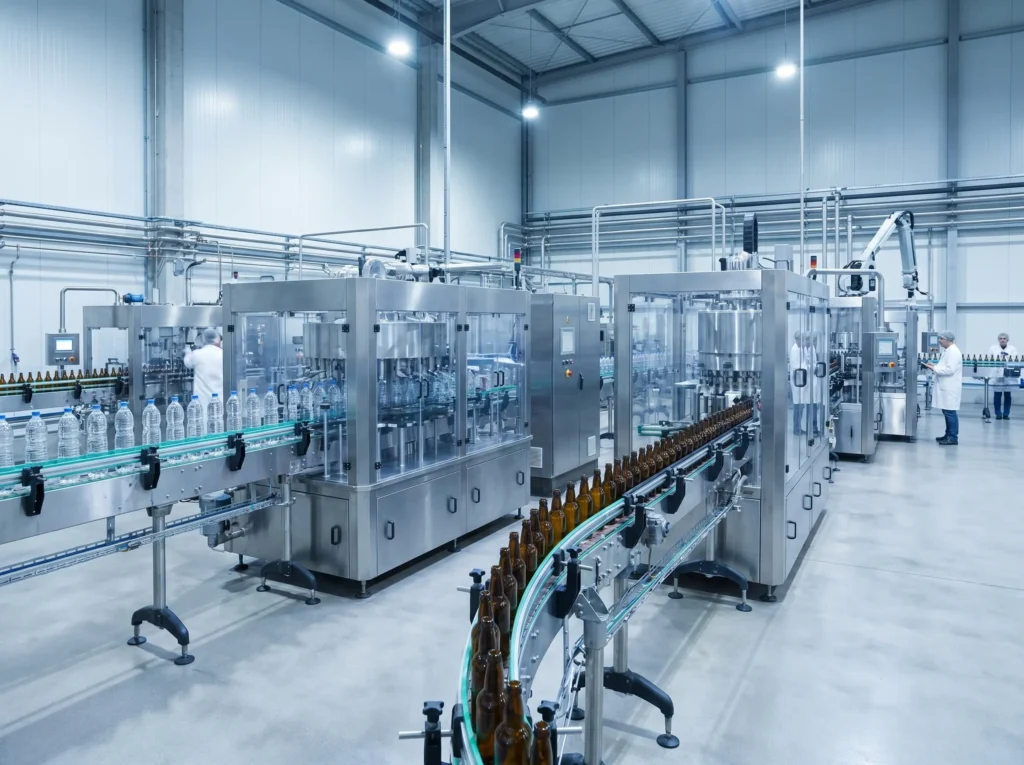
MotivaPAC builds liquid filling machines and bottling line equipment for bottled liquid products, including beverage liquids, wine, spirits, edible oil, condiments, daily chemicals, and related packaging applications. For beverage projects, the best machine direction depends on your liquid behavior, bottle format, closure type, target output, and whether you need a standalone filler or a more integrated bottling line.
Send your beverage, bottle, cap, and target capacity requirements
Quick Answer: What Makes a Good Manufacturer for Beverage Filling Equipment?
A good beverage filling machine manufacturer should be able to match the filling machine to your actual product instead of offering one general machine for every drink. Before quoting, the manufacturer should ask about beverage type, viscosity, foaming behavior, bottle material, filling volume, cap type, required speed, factory layout, and downstream packaging needs.
Strong manufacturers can explain which filling method fits your beverage, whether your project needs rinsing, filling, and capping integration, and what information is required for a reliable quotation.
Manufacturer, Supplier, Trading Company, or Marketplace?
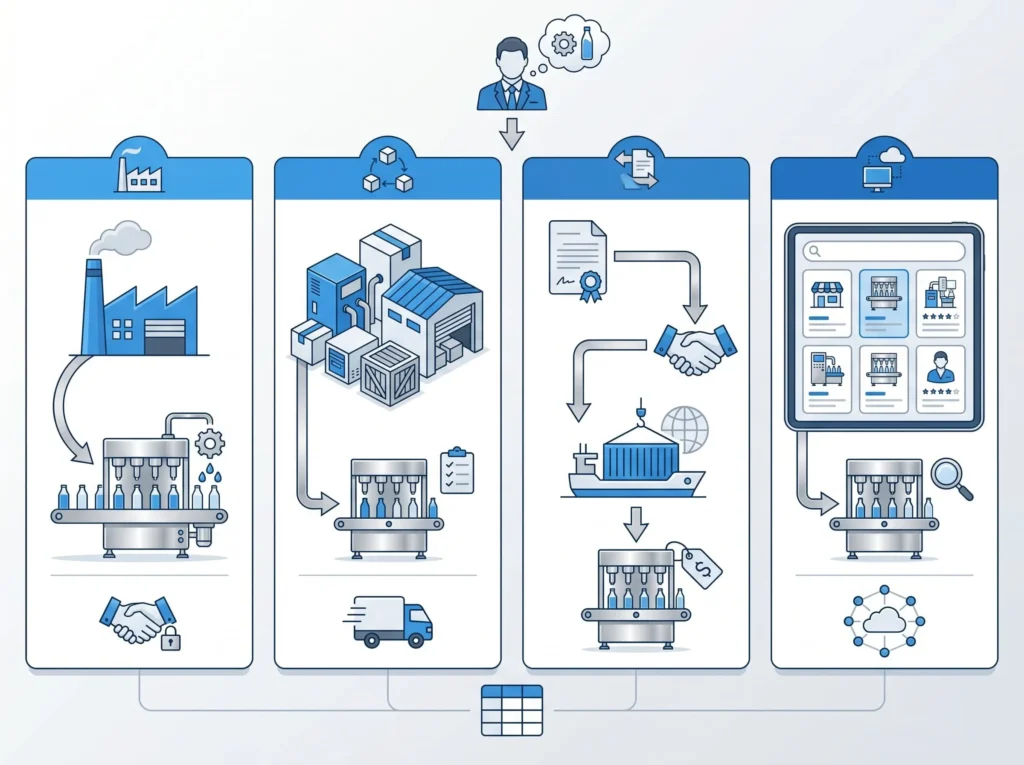
Many buyers search for beverage filling machine manufacturers but find a mix of direct factories, suppliers, trading companies, and B2B marketplace listings. Each option can be useful, but they do not offer the same level of technical responsibility.
| Option | What It Usually Offers | Best Fit | What to Check |
|---|---|---|---|
| Direct manufacturer | Engineering, machine configuration, production, testing, and after-sales support from the equipment maker | Custom beverage filling projects, bottling line integration, technical confirmation | Factory capability, machine range, engineering support, testing process, service response |
| Supplier | Access to one or more equipment sources, sometimes with project coordination | Standard machines, repeat purchases, simple procurement | Whether the supplier controls manufacturing, spare parts, and technical support |
| Trading company | Sourcing and export coordination from multiple factories | Buyers needing procurement help across different machine categories | Technical depth, responsibility for commissioning, warranty handling |
| B2B marketplace | Large supplier lists and initial price discovery | Early supplier research and comparison | Verified factory status, product proof, real project experience, communication quality |
For custom beverage bottling projects, working with a direct beverage filling machine manufacturer can reduce communication gaps because technical details, machine design, testing, and service support stay closer to the source.
Match the Manufacturer to Your Beverage Project
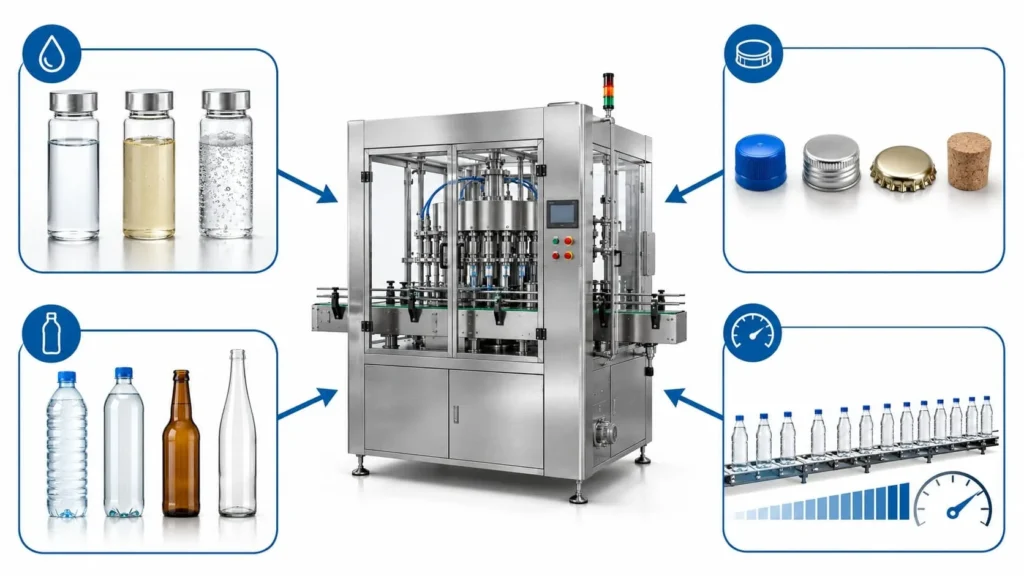
The right manufacturer should understand the beverage before recommending the machine. A low-viscosity tea drink, a juice beverage with pulp risk, a water-like functional drink, and a fruit wine project may require different filling logic, product contact materials, bottle handling, and cleaning considerations.
Beverage and Liquid Compatibility
Share the actual beverage type early in the conversation. Useful details include viscosity, foaming level, particles or pulp, sugar content, filling temperature, and whether the beverage is still or carbonated.
MotivaPAC is a stronger fit for bottled non-carbonated beverage liquids and similar liquid products that can be handled through suitable filling methods such as gravity filling, level filling, piston filling, metering pump filling, induction filling, or monoblock configurations. Carbonated drinks, cans, aseptic dairy, and beer may need different pressure, sealing, or sterilization systems and should be confirmed before quotation.
Explore MotivaPAC beverage filling options here: beverage filling machine.
Bottle and Closure Compatibility
Bottle material, bottle shape, neck finish, cap type, and filling volume all affect machine selection. A PET bottle with a plastic screw cap may need a different handling structure than a glass bottle with a cork, ROPP cap, crown cap, or other closure.
Before choosing a beverage filling machine supplier, confirm whether the company can review bottle samples or drawings and match the filling, capping, rinsing, labeling, and packing equipment around your container.
MotivaPAC supplies machine categories that can support bottle washing, filling, capping or corking, labeling, and end-of-line packing configurations depending on project requirements.
Filling Method and Automation Level
The filling method should match the product, not just the buyer’s budget. Gravity filling may fit some free-flowing liquids. Piston filling may be better for higher viscosity products. Metering pump filling can help with controlled dosing. Induction or level filling may support specific bottle and liquid applications.
Review MotivaPAC’s equipment range here: liquid filling machines.
Standalone Filler or Monoblock System
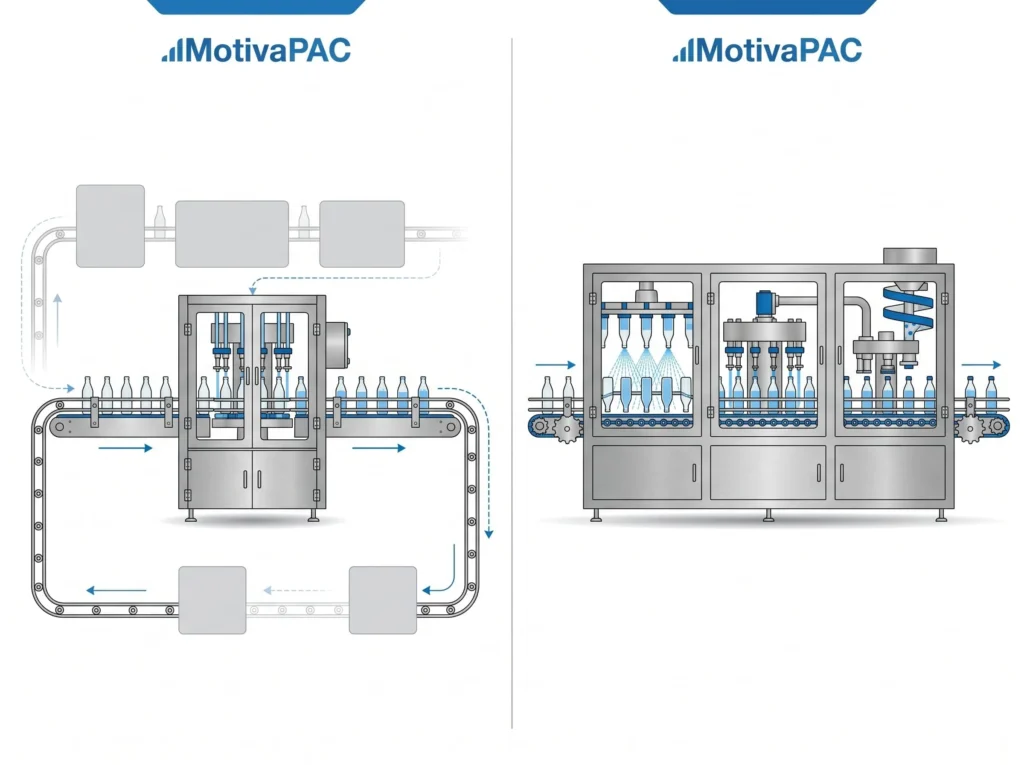
Some factories only need a standalone beverage filler because rinsing, capping, or labeling equipment already exists. Others need a compact rinsing-filling-capping system to save floor space and improve bottle transfer.
A manufacturer should be able to explain when a standalone filler is enough and when a monoblock system is more practical.
MotivaPAC monoblock systems can integrate rinsing, filling, and capping or corking for suitable bottled liquid projects. Learn more here: monoblock systems.
Factory Capability Checklist for Beverage Filling Machine Buyers
Use the following checks before shortlisting a beverage filling machine manufacturer, factory, or manufacturing partner.
| Checkpoint | Why It Matters | Questions to Ask |
|---|---|---|
| Beverage fit | Prevents buying a machine that cannot handle your liquid properly | Which filling method fits my liquid viscosity and foaming level? |
| Bottle and cap review | Ensures stable filling, capping, and conveying | Can you review bottle drawings, cap samples, or photos before quotation? |
| Machine configuration | Avoids underbuilt or overcomplicated equipment | Do I need filling only, filling-capping, or rinsing-filling-capping? |
| Bottling line integration | Reduces layout and transfer problems | Can the filling machine connect with rinsing, labeling, packing, or conveyors? |
| Factory testing | Helps confirm machine function before shipment | Can you test with similar bottles, caps, or liquid conditions? |
| Spare parts support | Reduces downtime after installation | Which wear parts should be stocked, and how are replacements supplied? |
| Export and documentation | Supports overseas purchasing and installation | What documents, manuals, and packing details are provided? |
| After-sales response | Matters for commissioning and long-term operation | How do you support installation, troubleshooting, and operator training? |
The strongest choice is not always the largest factory or the lowest quote. For beverage filling projects, the best fit is often the beverage filling machine manufacturer that asks better technical questions before proposing a machine.
What Information Should You Send Before Asking for a Quote?
A useful quotation depends on clear project data. Sending only a product name and target price usually leads to vague proposals.
Prepare these details before contacting a China-based filling equipment factory or any overseas equipment partner.
| RFQ Information | Examples or Notes |
|---|---|
| Beverage type | Juice drink, tea drink, water-like beverage, fruit wine, functional beverage, spirit, or other liquid |
| Liquid behavior | Viscosity, foam, particles, pulp, sugar content, filling temperature |
| Bottle material | PET, glass, or another container material |
| Bottle size | 250 ml, 500 ml, 750 ml, 1 L, or custom volume |
| Bottle shape and neck | Round, square, shaped bottle, neck diameter, bottle height |
| Closure type | Plastic screw cap, ROPP cap, crown cap, cork, T-cap, or other closure |
| Target capacity | Bottles per hour or bottles per minute |
| Required machine scope | Filling only, filling and capping, rinsing-filling-capping, or complete line |
| Existing equipment | Current rinsing, capping, labeling, packing, conveyors, or water treatment systems |
| Destination country | Helps with voltage, documentation, packing, and service planning |
| Factory layout | Available floor space, preferred line direction, connection points |
MotivaPAC can review these details before recommending a suitable equipment direction. After the main technical requirements are clear, a more useful quotation can be prepared.
When a China-Based Manufacturer Makes Sense
A China-based manufacturer can be a good fit when the buyer needs configurable equipment, line integration, and competitive manufacturing value. This route is especially practical when the project requires coordination between filling, capping, rinsing, labeling, carton packing, or other bottling line equipment.
Buyers should still confirm more than price. Ask about factory capability, export experience, machine testing, spare parts, installation support, and communication during technical confirmation.
When comparing a China beverage filling machine manufacturer with a local bottling line manufacturer, review the same fundamentals: machine fit, project responsibility, testing process, documentation, spare parts, and after-sales communication.
MotivaPAC’s current site positioning is direct liquid filling machine manufacturing and bottling line support for wine, spirits, edible oil, condiments, beverages, daily chemicals, and related liquid packaging applications. That makes MotivaPAC relevant for buyers who need a manufacturer that can connect beverage filling equipment with a wider bottling line configuration.
Where MotivaPAC Fits
MotivaPAC is suitable for buyers looking for a beverage filling machine manufacturer with liquid bottling project experience and related line equipment options. The strongest fit is bottled liquid projects where the filling method, bottle handling, capping, and downstream packaging need to be matched together.
MotivaPAC can be considered for:
- Bottled non-carbonated beverage liquids
- Juice-like and tea-like beverages, after confirming liquid behavior
- Water-like beverage products
- Fruit wine, wine, spirits, and similar bottled liquids
- Filling-only, filling-capping, or rinsing-filling-capping configurations
- Projects that may also need labeling, shrinking, carton packing, or other end-of-line equipment
Some applications require extra confirmation before recommending equipment:
- Carbonated beverages may require pressure or isobaric filling systems
- Cans require can filling and seaming equipment
- Aseptic dairy requires stricter sterilization and hygienic controls
- Beer may require specialized filling, pressure, and foam management
If your beverage falls into one of these categories, send the product and packaging details first. MotivaPAC can review whether the project matches available equipment or requires a different machine direction.
Questions to Ask Before Choosing a Manufacturing Partner
How do I know if a manufacturer is suitable?
A suitable manufacturer asks about your beverage, bottle, cap, target capacity, and line layout before quoting. The recommendation should explain the filling method, machine scope, automation level, and any technical risks that need confirmation.
Should I choose a manufacturer or a trading company?
A manufacturer is often better for custom beverage filling projects because technical communication, machine configuration, testing, and after-sales support are closer to the source. A trading company may be useful for sourcing, but buyers should confirm who is responsible for engineering, warranty, and spare parts.
What is the difference between a beverage filling machine supplier and manufacturer?
A supplier may sell or coordinate equipment from one or more factories. A manufacturer builds or configures the equipment directly. For projects with custom bottles, special liquids, or line integration, direct manufacturer communication can make technical confirmation clearer.
What information is needed for a beverage filling machine quotation?
Send beverage type, viscosity, foaming level, bottle material, bottle size, cap type, target BPH, filling temperature, required automation level, existing equipment, destination country, and layout details. These inputs help the manufacturer recommend a practical machine configuration.
Can one manufacturer supply rinsing, filling, capping, labeling, and packing?
Some manufacturers can supply a wider bottling line configuration, while others only supply one machine. MotivaPAC offers liquid filling machines and related bottling equipment categories, including rinsing, filling, capping or corking, labeling, and packing options depending on project scope.
Is MotivaPAC suitable for carbonated beverage filling machines?
Carbonated drinks may require pressure-controlled or isobaric filling equipment. MotivaPAC should review carbonation level, bottle type, closure, and target capacity before confirming whether the project matches available equipment.
Talk to MotivaPAC About Your Beverage Filling Project
Send your beverage type, bottle drawing or photo, cap details, target capacity, and required machine scope. MotivaPAC can review the project and recommend whether a standalone filler, filling-capping configuration, monoblock system, or wider bottling line direction is more suitable.