Liquid Filling Machine Selection Guide: How to Choose the Right Machine for Your Product
Choosing the right liquid filling machine starts with understanding your product, not comparing machine models.
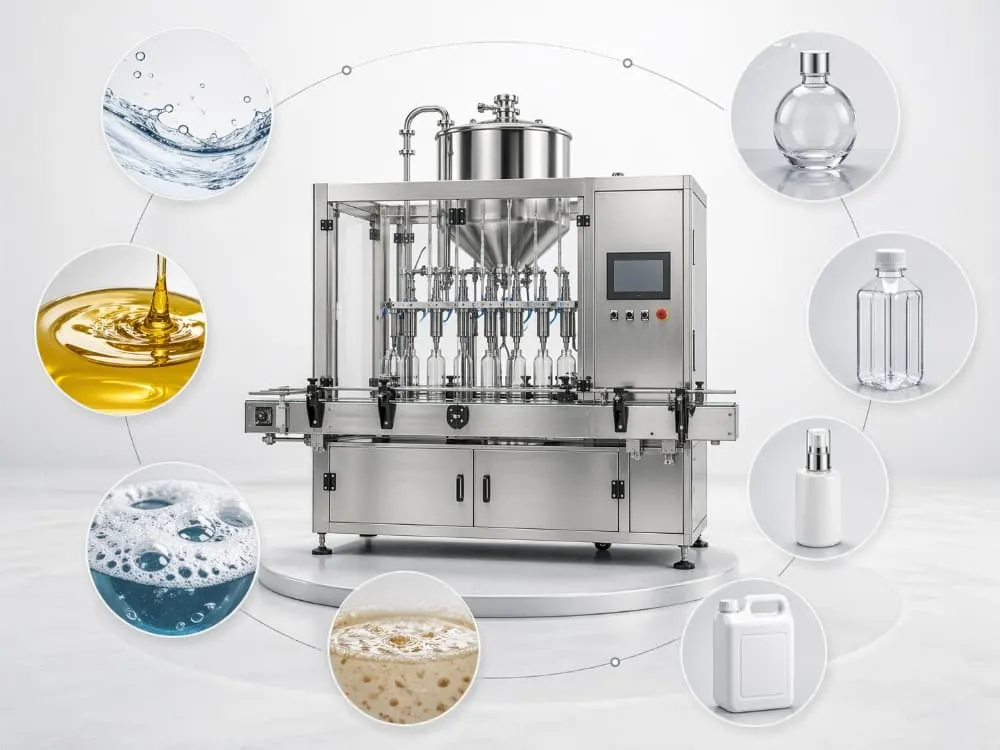
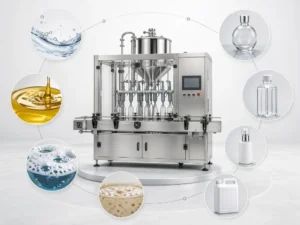
Many buyers begin by looking at speed, automation level, or price first. In practice, that often leads to the wrong decision. A machine that works well for one liquid may perform poorly with another. A filler that looks ideal on paper may become inefficient if your bottle is unstable, your product foams, your fill volume changes often, or your line needs more flexibility than expected.
The right machine is not simply the most advanced one or the fastest one. It is the machine that matches your product characteristics, packaging requirements, output target, accuracy expectations, and long-term production plan.
In this guide, we walk through the factors that actually affect machine selection, so you can make a clearer decision before investing in a standalone filler, a liquid filling and capping machine, or a more complete packaging line.
1. Start with Your Product, Not the Equipment
Before you compare filling technologies, define the liquid itself.
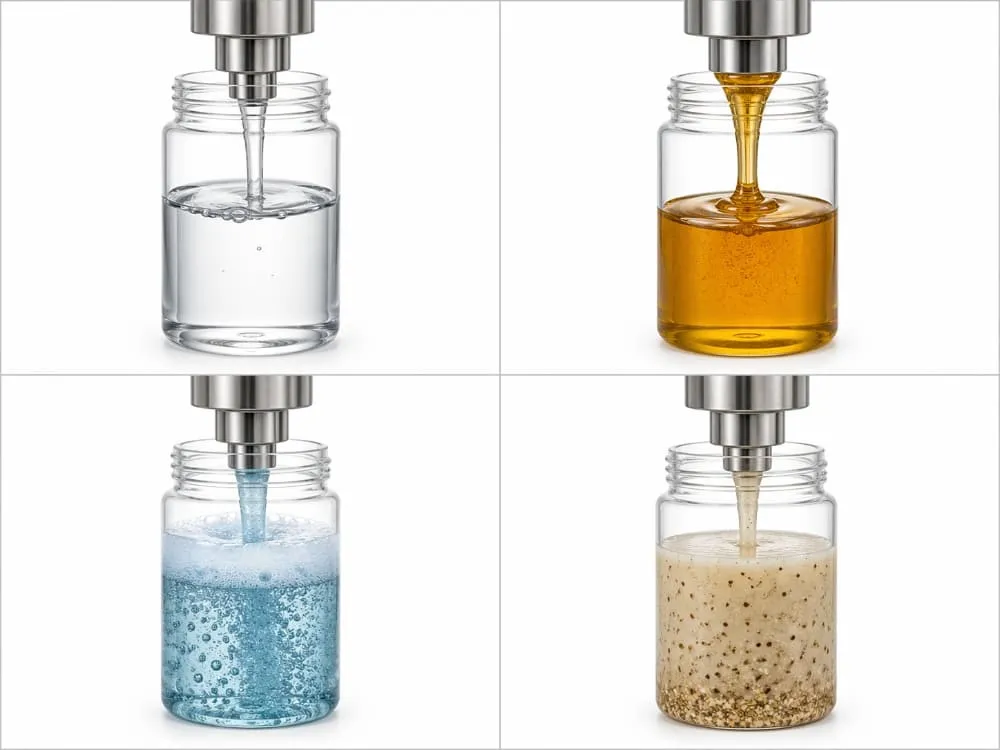
This is the most important starting point because the product determines how the machine should move, control, and deliver the liquid into the container. If this first step is wrong, the rest of the selection process becomes unreliable.
When evaluating your product, focus on these five questions:
- Is the liquid free-flowing or highly viscous?
- Does it foam during filling?
- Does it contain particulates?
- Is it sensitive to agitation or shear?
- Does it require a sanitary or easy-to-clean filling path?
A free-flowing liquid usually gives you more machine options. A viscous product, a foam-sensitive liquid, or a product with particulates immediately narrows the best machine choices.
Free-flowing liquids
Water-like products, many beverages, some wines, and similar liquids usually move easily through the filling path. For these products, the key questions are often about speed, fill consistency, and packaging requirements rather than basic flow capability.
Viscous liquids
If your product is thick, sticky, or slow-moving, you may need a viscous liquid filling machine with a filling principle designed for stronger product control. Syrups, sauces, creams, gels, and some oils often need a more controlled approach than thin liquids.
Foaming liquids
Foaming products require extra care. If the liquid reacts poorly to impact, the wrong filling method can create unstable fill results, overflow, or slow cleanup between runs.
Liquids with particulates
Products with pulp, seeds, fibers, granules, or suspended solids require special attention to the flow path, nozzle size, and valve design. A machine that fills a thin liquid well may not perform reliably with particulate-heavy products.
Practical advice
If you are not fully sure how to classify your liquid, do not guess. Start by describing it in real production terms:
- how it pours
- how it behaves when agitated
- whether it drips or strings
- whether it foams
- whether solids are present
- whether cleanup needs to be fast and frequent
That information is far more useful than a general statement like “it is just a liquid.”
2. Then Check the Package: Bottle Type, Shape, Opening, and Fill Volume
After the product, the next decision factor is the container.
A liquid bottle filling machine should not be selected on liquid characteristics alone. The bottle or container affects filling stability, nozzle design, transfer performance, speed, and changeover efficiency.
You should define these points before comparing equipment:
- bottle or container material
- bottle shape
- bottle opening size
- bottle height
- fill volume
- whether visual fill level matters
- whether the line will run one bottle size or multiple SKUs
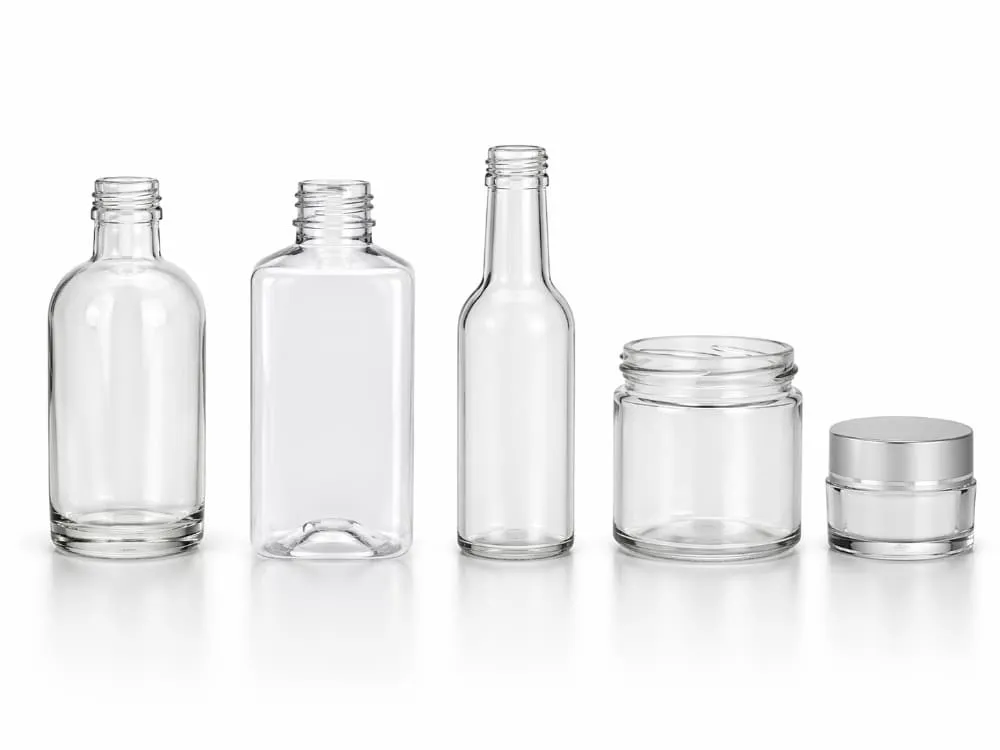
Bottle material
Glass, PET, rigid plastic, and specialty containers behave differently on the line. Some containers remain stable at higher speed, while others require gentler handling.
Bottle shape
Round bottles are generally easier to manage than square, flat, or irregular shapes. If your package has an unusual profile, stability during filling, capping, and labeling becomes a bigger issue.
Bottle opening
A narrow-neck bottle and a wide-mouth container may need very different nozzle approaches. The opening can influence filling speed, splash control, and how accurately the liquid enters the container.
Fill volume
A machine selected for 50 ml containers is not necessarily the best choice for 5 L containers. Fill volume affects speed, accuracy, and machine structure more than many buyers expect.
Visual fill level
In some applications, especially with clear containers, visual consistency matters as much as measured volume. This is common in retail products where customers will see the liquid level directly on the shelf.
Practical example
A clear 750 ml spirits bottle is a good example of why packaging matters. Even when the actual fill amount is correct, variations in bottle geometry can make the liquid level look uneven across finished bottles. In that kind of project, visual fill consistency becomes part of the machine selection logic, not just a secondary detail.
3. Match the Filling Principle to the Product and Package
Once your product and package are clearly defined, the next step is choosing the filling principle.
This is where many buyers make either a very good decision or a very expensive mistake.
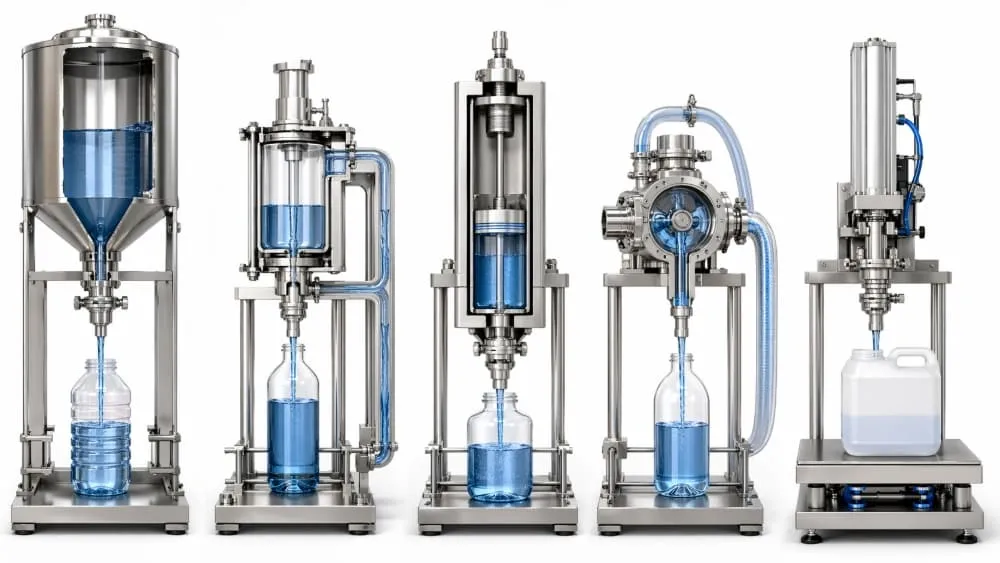
Gravity filling
Gravity filling is often suitable for thin, free-flowing liquids that do not require heavy product control. It can be a practical option when the liquid does not create unusual filling challenges.
Best fit:
- low-viscosity liquids
- simple filling conditions
- products that do not need strong flow control
Less suitable for:
- thick products
- products with significant particulates
- applications that demand tighter control over flow behavior
Overflow filling
Overflow filling is often a strong choice when visual fill level matters, especially for clear bottles. If shelf presentation depends on a consistent visible liquid height, overflow logic may be more attractive than a purely volume-focused approach.
Best fit:
- clear bottles
- retail products where fill appearance matters
- free-flowing liquids
Less suitable for:
- highly viscous liquids
- products where visual level is not important
Piston filling
A piston liquid filling machine is often better suited to thicker products. When the product does not flow easily, piston-based filling usually offers better control.
Best fit:
- viscous products
- sauces, creams, pastes, syrups
- some products with particulates
Less suitable for:
- very thin liquids where simpler methods may be more efficient
Pump filling
Pump filling can offer strong flexibility across different liquids and packaging needs. Depending on the product and required control level, pump-based filling may work well for medium-viscosity products or applications that need adaptable filling settings.
Best fit:
- varied liquid products
- applications needing flexible control
- some low- to medium-viscosity products
- some specialty filling projects
Net weight filling
Net weight filling is worth considering when weight matters more than visible level or simple volume control. This is especially relevant for higher-value liquids, industrial containers, or projects where weight-based consistency is the priority.
Best fit:
- products sold or controlled by weight
- larger containers
- industrial liquids
- higher-value liquids
A simple way to think about it
Do not ask only:
“What machine type is popular?”
Ask instead:
- Does this filling principle fit how my product behaves?
- Does it fit my bottle style?
- Does it support my accuracy needs?
- Does it still make sense at my target output?
That is the better way to choose the right liquid filler machine.
4. Choose the Right Automation Level
After the filling principle is clear, the next step is deciding how automated the system needs to be.
The right answer depends on output, labor, changeover frequency, and how stable your production format is.
Manual
A manual filler may work for lab use, trials, or very low-volume filling, but it is rarely the best long-term solution for commercial production.
Semi automatic
A semi automatic liquid filling machine is often the right choice when you want more control and repeatability than manual filling, but do not yet need full inline automation.
This can be a very practical solution when:
- output is still moderate
- bottle formats change often
- you run multiple SKUs
- you are validating a product before scaling
- you want a lower initial investment without losing too much control
Automatic
An automatic liquid filling machine becomes more attractive when:
- your production volume is higher
- consistency across long runs matters
- labor reduction is important
- you need smoother integration with conveyors, cappers, or labelers
Rotary or monoblock systems
As output and integration needs increase, rotary and monoblock formats deserve attention. These systems are often considered when rinsing, filling, and capping need to work together in a tighter production layout.
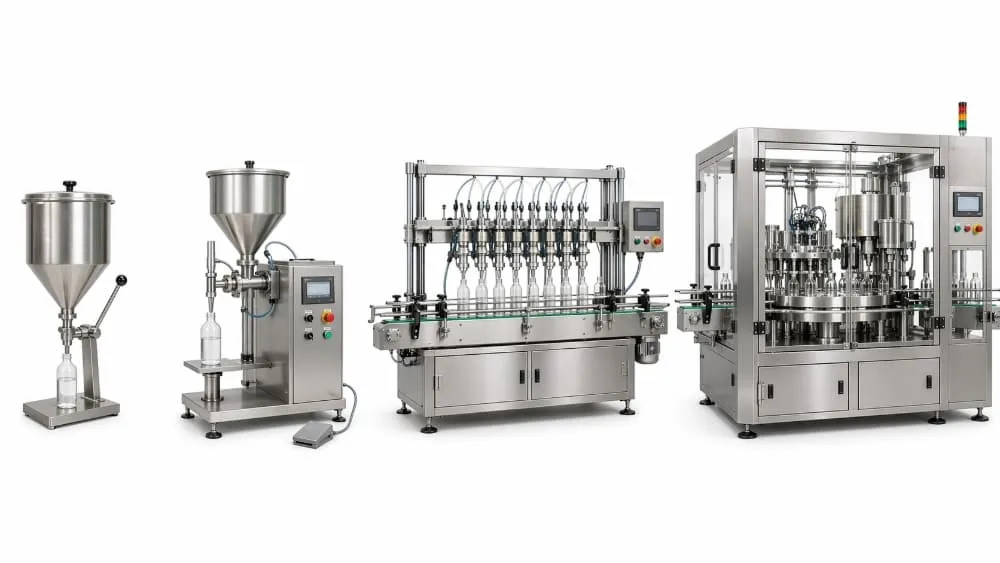
Practical example
If you are filling small cosmetic or pharmaceutical containers in lower to medium volumes, a semi-automatic piston solution may be the most practical first step. In that kind of application, precision, product control, and operator flexibility may matter more than high-speed automation. On the other hand, if the same product moves into larger commercial demand with stable packaging formats, an automatic setup may become more efficient.
Practical advice
Do not ask:
“Should I buy semi automatic or automatic?”
Ask:
- What output do I need now?
- What output will I likely need in the next 12 to 24 months?
- How often will the bottle or SKU change?
- How much operator involvement is acceptable?
- Do I need only filling, or filling plus capping and line coordination?
5. Match the Machine to Your Output, Accuracy, and Changeover Needs
A machine may be technically compatible with your product and still be the wrong commercial choice.
That is why output, accuracy, and changeover must be considered together.
Output
The real question is not just “How many bottles per hour can this machine reach?”
The better question is:
How many bottles per hour can this machine run consistently under real production conditions?
You should think about:
- your target output
- your peak output
- downtime tolerance
- labor availability
- future expansion
Accuracy
Not every application demands the same accuracy standard. Some products are highly sensitive to overfill cost. Others are more sensitive to visible inconsistency. Some low-volume products require tighter control simply because the container size is small.
Changeover
If your factory runs one product in one bottle all day, the machine decision is simpler. If you run multiple SKUs, multiple bottle sizes, or frequent product changes, changeover becomes a major part of the return on investment.
Maintenance and cleaning
Even a good liquid filling machine can become frustrating if it is hard to clean, slow to maintain, or too complicated for the operators who use it daily. Practical maintenance should always be part of the decision.
A common mistake
Some buyers focus heavily on maximum speed and ignore the fact that their real production model includes:
- frequent bottle changes
- short production runs
- operator intervention
- cleaning between products
- downstream bottlenecks
In that case, the “fastest” machine on paper may not deliver the best real result.
6. Decide Whether You Need a Standalone Filler or a More Complete Line
Many buyers ask only one question:
Which liquid filling machine should I buy?
But often the more useful question is:
Do I really need only a filler, or do I need part of a coordinated packaging solution?
When a standalone filler is enough
A standalone filler often makes sense when:
- your conveyor system already works well
- your capping system is already in place
- you are replacing only one section of an existing line
- you are upgrading in stages
When filling and capping should be considered together
A liquid filling and capping machine often makes more sense when:
- bottle handling needs to stay stable between processes
- labor reduction matters
- space is limited
- fewer machine interfaces are preferred
- product exposure should be minimized
When full-line thinking is better
If your project includes:
- rinsing
- filling
- capping
- labeling
- end-of-line packaging
then it usually makes sense to think beyond the filler itself.
In that situation, the question is no longer only about one machine. It becomes a line-planning decision.
Practical example
If you are launching a new edible oil or condiment bottling project from zero, buying one filler first without considering capping, labeling, and downstream packaging often creates coordination problems later. By contrast, if you already have a stable bottling line and only need to improve filling performance, a standalone filler may be the right choice.
7. Real-World Selection Scenarios
Here are three practical scenarios that show how the selection process changes based on the actual application.
Scenario 1: Clear spirits in glass bottles
You are filling a free-flowing liquid into clear 750 ml glass bottles. The product is not highly viscous, but visual fill appearance matters because the finished bottle is displayed directly to consumers.
Best selection logic:
Start by evaluating whether visual level consistency is more important than purely theoretical volume logic. In this kind of application, overflow-style thinking often deserves serious attention.
Scenario 2: Small-volume viscous cosmetic product
You are filling a thick cream or gel into small cosmetic containers. Output is still moderate, bottle sizes may vary, and you need reliable product control without overcommitting to a large line.
Best selection logic:
A piston-based semi automatic liquid filling machine may be the more practical choice at this stage, especially if the business is still growing and flexibility matters.
Scenario 3: Industrial liquids in drums or larger containers
You are filling industrial liquids into large containers where weight and product value matter more than retail appearance.
Best selection logic:
Net weight filling may be more suitable than a conventional bottle-focused volumetric system, especially when the containers are large and the application depends on weight-based control.
These scenarios show the main principle of this guide:
The right machine depends on the application, not just the category name.
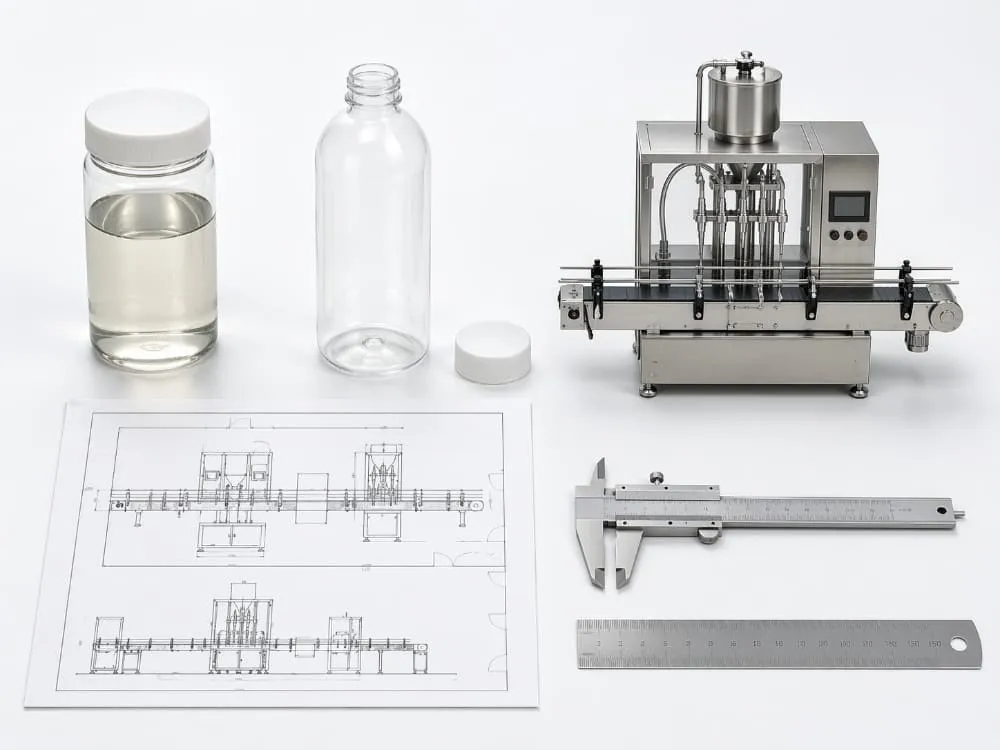
8. What to Prepare Before Requesting a Quote
If you want a useful machine recommendation, prepare the right inputs first.
Before requesting a quote, define:
- Product type
- Product viscosity
- Whether the product foams
- Whether the product contains particulates
- Bottle or container type
- Bottle opening size
- Fill volume
- Target output
- Accuracy expectation
- Single machine or full-line goal
- Changeover frequency
- Cleaning or sanitary requirements
The more clearly you define these points, the easier it becomes to compare a liquid filling machine, an automatic liquid filling machine, or a more integrated line solution in a meaningful way.
Final Thoughts
The best liquid filling machine is not the one with the longest feature list. It is the one that matches your product, your bottle, your output target, and your production plan.
If you start with machine names, the process usually becomes confusing. If you start with your product and packaging requirements, the decision becomes much clearer.
A free-flowing product in a clear bottle may need a very different solution from a viscous product in a small container. A moderate-output flexible production line may benefit from a semi automatic liquid filling machine, while a larger, more stable project may justify an automatic liquid filling machine or even a more integrated filling and capping line.
If you are currently evaluating equipment, the best next step is simple: define your product, bottle, fill volume, and target output first. Once those inputs are clear, choosing the right machine becomes much easier.
FAQ
What is the best liquid filling machine for viscous products?
In many cases, viscous products are better matched to piston or pump-based filling approaches than to basic gravity filling. The best choice depends on viscosity level, particulates, fill volume, and speed target.
When should you choose a semi automatic liquid filling machine?
A semi automatic liquid filling machine is often a good choice when output is moderate, bottle sizes change frequently, or the project still needs flexibility without the cost of full automation.
What affects liquid filling machine selection the most?
The biggest factors are usually product viscosity, foaming behavior, particulates, bottle type, fill volume, target output, and required automation level.
Do you need a standalone liquid filling machine or a complete line?
If you already have a stable conveyor, capping, and labeling setup, a standalone filler may be enough. If your project includes multiple connected packaging steps, it often makes more sense to think in line terms.